Fast Facts About Minnesota State Mankato
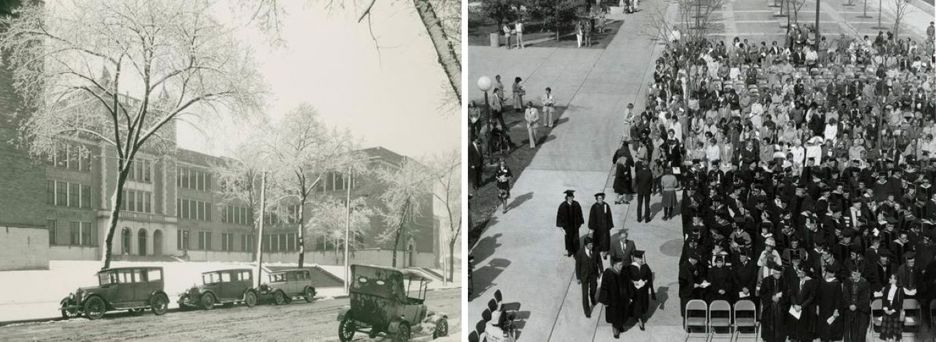
From its founding in 1868 as Mankato Normal School, serving 27 students, Minnesota State University, Mankato has been an institution where big ideas meet real-world thinking.
The school became Mankato State Teachers College in 1921, Mankato State College in 1957 and Mankato State University in 1975. In 1998, it took the name that stands today—Minnesota State University, Mankato. Although our first graduates earned one-or two-year degrees to become teachers, the University has been granting four-year degrees in a growing number of disciplines since 1927. The first master’s degrees were awarded in 1954 and the first doctorate was conferred in 2009.
Minnesota State Mankato is led by Dr. Edward Inch, who became the 13th president of the University on July 1, 2021. President Inch as well as the faculty, students and staff are committed to embracing challenge, finding solutions to problems and making life better for people throughout our state, our region and our global society.
The Place
- Approximately 85 miles southwest of the Twins Cities of Minneapolis and St. Paul, Minnesota State Mankato sits atop 303 acres overlooking the Minnesota River Valley. The Greater Mankato area has a population of 103,566.
- Minnesota State University, Mankato serves learners in the Twin Cities metropolitan area through credit and non-credit programming at its location in Edina, Minn. and various Minnesota community colleges. In addition, The University serves learners with 100 percent online bachelor’s degree completion programs in the fields of nursing, dental hygiene, business and leadership. It also provides a 100 percent online master’s of business administration (MBA) and a master’s of accountancy (MAcc).
- Minnesota State Mankato adds $827 million annually to the Mankato economy (2023 Minnesota State system study.)
The People
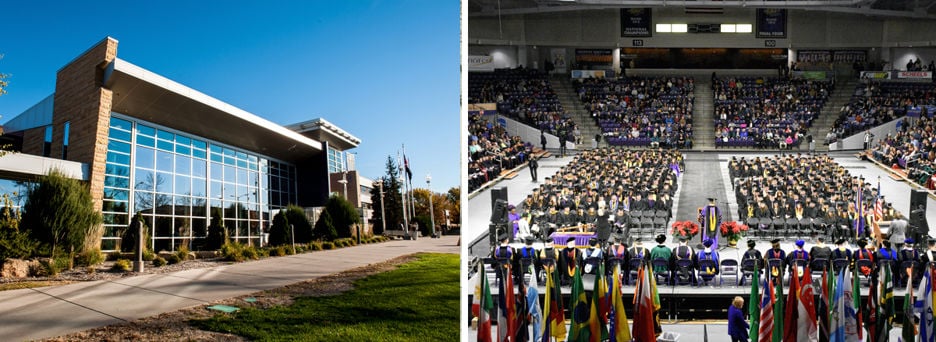
- More than 14,000 students, including more than 1,300 international students from more than 90 countries.
- More than 1,600 faculty and staff, including nearly 700 teaching faculty, bring their talents to the University. Nearly 90 percent of the full-time instructional faculty have terminal degrees.
- The University has nearly 2,600 students of color, 13.7 percent of employees of color, and an institutional commitment to welcoming underrepresented populations.
- There are nearly 145,000 Maverick alumni worldwide.
The Leadership:
- Edward S. Inch, President
- David Hood, Provost & Senior Vice President, Academic Affairs
- David Jones, Vice President for Student Affairs & Enrollment Management
- Mark Johnson, Vice President and Chief Information Officer
- Kent Stanley, Vice President for University Advancement
- Richard J Straka, Vice President for Finance and Administration
- Lynn Akey, Vice President for Student Success, Analytics and Integrated Planning
- Henry Morris, Vice President for Diversity, Equity & Inclusion
- Sheri Sargent, Chief of Staff
The Programs
- Minnesota State Mankato offers more than 130 undergraduate programs of study, including 13 pre-professional programs, and more than 80 graduate programs, including master’s, specialist and doctoral programs. These programs are offered through five academic colleges: Allied Health and Nursing; Business; Education; Humanities and Social Sciences; and Science, Engineering, and Technology. Several of the programs, or portions of them, are also offered through various Extended Education venues, including the facility at 7700 France in Edina and at the Normandale Partnership Center.
- The University’s academic quality is recognized through its accreditation by the Higher Learning Commission. More than 90 academic programs also hold specialized accreditation, certification and or recognition from 25 different recognized accrediting agencies; six non-academic programs also hold specialized accreditation, certification, or recognition.
- The University’s aviation program partners with both Delta Air Lines and Sun Country Airlines to provide students with job opportunities immediately upon graduation.
- Applied research opportunities abound through the Organizational Effectiveness Research Group; Chelsey Center on Aging; Mankato Area Lifelong Learners; Center for School-University Partnerships; Kessel Institute for the Study of Peace and Change; Minnesota Center for Automotive Research; Minnesota Center for Engineering and Manufacturing Excellence; Minnesota Center for Transportation Research; the Center for Innovation and Entrepreneurship; the Andreas Observatory; Center for Rural Policy and Development; Center for Transportation Research and Implementation; Southern Minnesota Historical Center; Standeford Observatory; Urban and Regional Studies Institute (URSI); Small Business Development Center; the annual Undergraduate Research Symposium; and the Water Resources Center.
- Alumni and friends in 2022 supported students and the University in significant, record-breaking fashion, allowing the University’s Foundation to provide more than $2.3 million in scholarships and emergency grants, a Foundation record for support and a 43 percent increase from 2018. Donors supported the Maverick Food Pantry, which distributed 160,000 pounds of food to students in need, and crowdfunded the KMSU pledge drive, Athletics’ Maverick Week, the Maverick Machine, and Maverick Handball. Together, those activities received more than $200,000 in private donations. The University Foundation secured $12.4 million in total donations for FY22, the fourth highest fundraising total in University history.
- A centralized scholarship application program, Scholarship Finder, provides student applicants a one-stop-shop process of applying for scholarships, where their needs and strengths are matched with scholarship criteria.
- The University provides for global learning through international partnerships with universities, businesses and organizations.
- International lectures and cultural events on campus include the annual International Festival as well as student-run Signature Nights, showcasing the cultures, cuisine and stories of nations from which the University’s student population continues to grow.
- Three of the Minnesota Department of Education’s TRIO programs (Upward Bound, Student Support Services, and Educational Talent Search) serve both underrepresented pre-college and college students.<
- The University plays NCAA Division I men’s and women’s hockey (Western Collegiate Hockey Association); NCAA Division II (Northern Sun Intercollegiate Conference) men’s baseball, basketball, cross country, football, golf, track, and wrestling; and NCAA Division II women’s basketball, cross country, golf, soccer, softball, swimming, tennis, track, and volleyball, all serving nearly 600 student-athletes.
- In sports, the University ranked 10th for the 2021-22 season national standings in the Learfield Sports Directors’ Cup, which recognizes institutions with broad-based programming and success in men’s and women’s sports. The Mavericks have finished in the top 25 in the country for close to two decades.
- The University’s 659 student-athletes combined for a 3.37-grade point average during the 2022 spring semester.
- A decade-long, dedicated response to hunger happens through Campus Kitchen, which gathers community-wide food donations, turns them into meals, and delivers them to community groups to serve the area’s hungry. Since its start in 2005, Campus Kitchen and its student volunteers have provided more than 92,000 meals.
- A vibrant campus life includes more than 200 academic student groups, intramural sports, leadership and religious organizations, honorary and professional fraternities and sororities, and special interest groups; a Women’s Center; an LGBT Center that helped earn Minnesota State Mankato’s status as one of the 100 Best Campuses for LGBT students by The Advocate College Guide for LGBT Students.
- Strong ties to alumni are maintained through the print and online editions of TODAY magazine (today.magazine.mnsu.edu) as well as regular events including the annual Distinguished Alumni Awards, Mankato Breakfast in the Cities speakers, Maverick Movement corporate events, reunions, Homecoming, the Legacy Brunch during Family Weekend and other gatherings near and far.