
Frequently Asked Questions

Page address: http://www.mnsu.edu/cdc/family/faq.html

Is there a "best" major that will prepare my student for a productive career?

Actually, there is often very little direct relationship between a major and a particular career path, except in highly technical jobs or careers that require licensure or a certain skill set (i.e. nursing, teaching). However, this does not mean that obtaining a college degree is not important to your career path! Possessing a 4-year degree (in something) is a necessary requirement for almost any entry-level professional job and certainly impacts promotion and career advancement.

The best major for any student is in an area that the student finds highly interesting and enjoys learning about the content of that field simply for the sake of learning! Trends and "hot" career areas come and go and many times do not happen as forecasters expect. Lastly, it is very typical for a student to change his/her major several times during the course of study.

Should my student double major? What about choosing a minor field of study?

Most employers do not place a premium on a double major. It usually requires an extra one or two semesters to obtain a second major and does not particularly enhance a student’s marketability. Exceptions would be a second major or major and minor chosen for a specific career, such as English and chemistry for technical writing, or a health policy major and business minor for hospital administration. Of course, some students may choose to double major primarily for academic/intellectual purposes.

What sorts of career activities should my student be doing during his/her first years in college?

The first couple of years of college are generally a time for students to adjust to college life and begin to explore who they are through coursework and extracurricular activities. During this time, your student should also begin to assess their skills, interests, and values in regard to a potential career path. For more information on career planning for MSU students by year in school, visit our 4-Year Planning Guide

How important is Grade Point Average (GPA) when it comes to job prospects following graduation?

A good number of students get off to a rocky start and are able to eventually pull up their grades; however, this can be very difficult to do. Some employers (i.e. accounting employers) use GPA cutoffs in considering applicants, particularly when the job market is an "employers market". Other employers stress more the student’s overall background: experience, number of hours worked during the school year to finance college, leadership activities, etc. Encourage your student to make academics a high priority beginning with his or her freshman year. Nevertheless, it is important to remember that it may take him or her a while to adjust to the academic demands of college.

For more information on what employers look for in new graduates, read the article What Employers Want vs. What They See in Job Candidates courtesy of the National Association of Colleges and Employers.

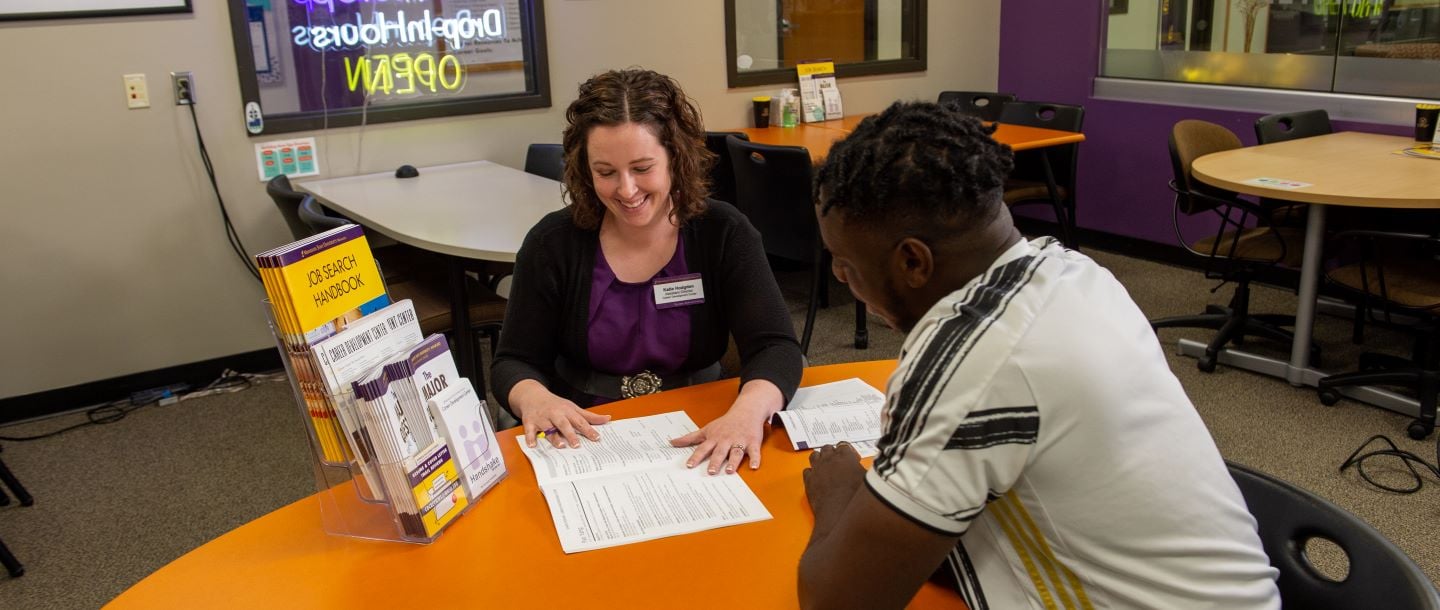
Can I visit Career Services and/or meet with a career advisor to discuss my student's career development?

We are pleased to provide information to parents regarding a variety of career topics; however it is important that students assume responsibility for their own career development. Please encourage your student to visit with our staff to discuss career concerns. In addition, as a parent/family member, it is important for you to be aware of the Family Educational Rights and Privacy Act (FERPA) of 1974, which provides strict guidelines regarding the sharing of educational records.

My student needs to work to earn money for school. What kind of impact might this have on his/her academics and marketability to employers upon graduation?

Of course, the impact of working during college varies tremendously depending on the student. That said, research on this issue has shown that working approximately 14-20 hours per week causes students to better manage their time AND perform better academically. Unfortunately, it has also been shown that when students work more than 20 hours per week, the impact on academic progress can often be negative.

In addition, in today’s competitive employment market, many employers seek students who have related internship, summer, or part-time job or volunteer experiences. Encourage your student to seek out these experiences, whether or not they are a requirement in the student’s academic program. Besides contributing to future resume content, part-time and seasonal job experiences can assist a student in trying out various skill sets and career areas, as well as generate future employment references and networking contacts.

My student has gained credits through the Post-Secondary Options program and is on track to graduate in 3 years. What are the pros and cons of graduating early or graduating late?

The advantages of graduating early are lower educational expenses, and the ability to start employment or graduate school earlier. The disadvantages, however, may include the sacrifice of academic honors, work experience, and extracurricular and volunteer activities that may contribute to a student's maturity level and qualifications. Other students graduate late due to light course loads, academic difficulties, changing majors, poor academic advising, lack of direction, or reluctance to leave the cocoon of the college environment. Advantages to late graduation include the ability to take additional electives to improve marketability, and extra time to gain more career-related or leadership experience. Disadvantages to late graduation are increased college costs and possible disapproval of employers and graduate schools.

When should my student begin to use the Career Development Center?

The CDC welcomes students as soon as they begin their college experience. However, students should begin using the resources available to them through the CDC no later than their sophomore year. In short, the CDC provides services to students in the areas of: choosing a major, securing a part-time/seasonal job, and conducting an effective job or internship search.

What types of services are provided to MSU alumni?

The philosophy of the CDC emphasizes the teaching and development of career and job search skills to serve the individual throughout his/her lifetime. In addition, the staff and resources of the CDC focus on assisting new graduates with the entry-level professional job search. Therefore, CDC services to MSU alumni focus on the provision of resources and information as opposed to direct service. Alumni services consist of the following:

  • Access to job listings through mavjobs.com (optional resume referral program $25 per year)
  • Resume and cover letter review/consultation via e-mail or fax
  • Up-to-date Career Resource Library
  • A user-friendly website with numerous job search links organized by field
  • Access to career days, on-campus recruiting, and job fairs
  • Referrals for further employment assistance and career/job search support

Where can I find information and statistics on the employment of MSU graduates?

The CDC conducts a yearly "Follow-up Study of New Graduates" within 1 year following graduation. This report is on the Graduate Statistics page.

Further information on occupations, including salary information and job outlook, is available from the Bureau of Labor Statistics Occupational Outlook Handbook

Which employers/organizations recruit MSU students & graduates?

A large number of local, regional and national employers visit the MSU campus each school year to conduct interviews for entry-level jobs and internships and participate in campus career events. In addition, many employers in a wide variety of fields list jobs and internships through our mavjobs.com system. List of employers interviewing on-campus