
Replace Armstrong Hall for the Next Generation of Learners

Our central academic infrastructure challenge remains unresolved
Our University, along with many of our students, alumni and supporters advocated strongly during the 2026 Minnesota legislative session for $97 million in bonding to replace Armstrong Hall. We are disappointed that our critical need was not included in the final bonding bill. But we remain resolute. Our students, faculty and staff deserve safe, functional spaces in which to learn and work. We will continue advocating to our elected officials to find a solution to this critical facility, and we encourage all our supporters do the same.
Frequently Asked Questions
There were many competing priorities in a limited bonding environment. While Armstrong Hall ranked highly within the Minnesota State system request and received significant support from students, faculty, alumni, business leaders and community partners, the project ultimately was not included in the final package. The important point is that the underlying need remains unresolved.
We can accept private funding to replace Armstrong Hall and remain open to exploring all viable funding options. However, to date, donor interest in supporting a classroom-focused academic facility has been limited. We are pursuing state funding for Armstrong Hall because it is our core academic building and the only facility on the Comprehensive Facilities Plan eligible for state bonding under system guidelines. With three critical facilities needing replacement, we are intentionally pursuing multiple funding strategies to advance each project and meet the University’s broader facilities goals.
The pandemic gave higher education a real-world stress test of remote instruction, and the results are clear. While online and hybrid options have expanded access and flexibility, especially for adult learners and graduate students, many traditional undergraduates are more successful and more engaged when they are learning on campus. In-person instruction supports stronger academic outcomes, deeper connections and a richer student experience.
Moving 30% of our in-person classes online would also have a negative impact on the local economy. Students, faculty, and staff contribute significantly to local businesses and organizations—as both customers and employees. When they are not coming to campus to learn, they are also less likely to live, work, shop, and engage in the community, diminishing the economic vitality of the region.
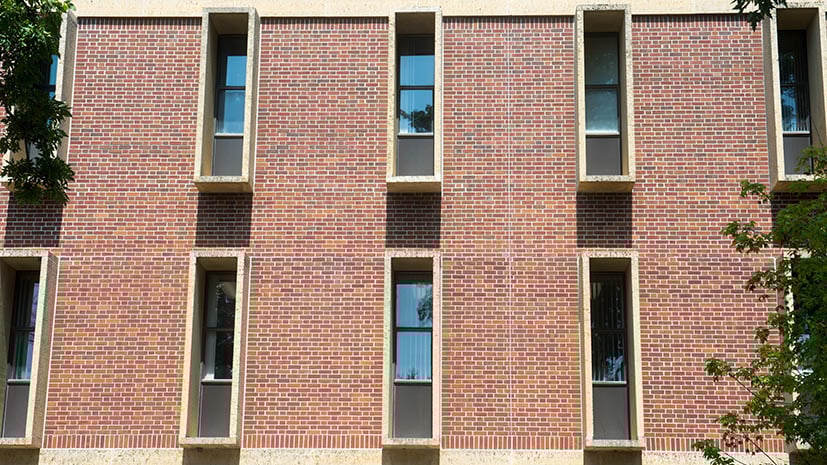
Armstrong Hall, constructed in 1964, has served the campus well for more than six decades. However, built to the design and construction standards of that era, the facility has not kept pace with current needs. Despite the ongoing efforts of the University’s Building Maintenance and Facilities teams, the cumulative wear from daily use by more than 4,000 people has taken a significant toll, making the building increasingly costly and less efficient to maintain. The estimated costs to repair the building and bring it up to code are more than $70 million. That’s more than two-thirds of the investment in a new building, and the repairs would likely only prolong the building’s life for about 20 years.
The safety of our students, faculty and staff remains our top priority, and we will continue working to maintain that. While short-term fixes are not a long-term solution, we will do what must be done to keep the building safe while pursuing any available funding options for Armstrong’s replacement.
If a building failure requires closure, leadership has plans to adjust schedules and repurpose available spaces to support as many in‑person classes as possible. Some courses will move online, with selections made to best support student success.