
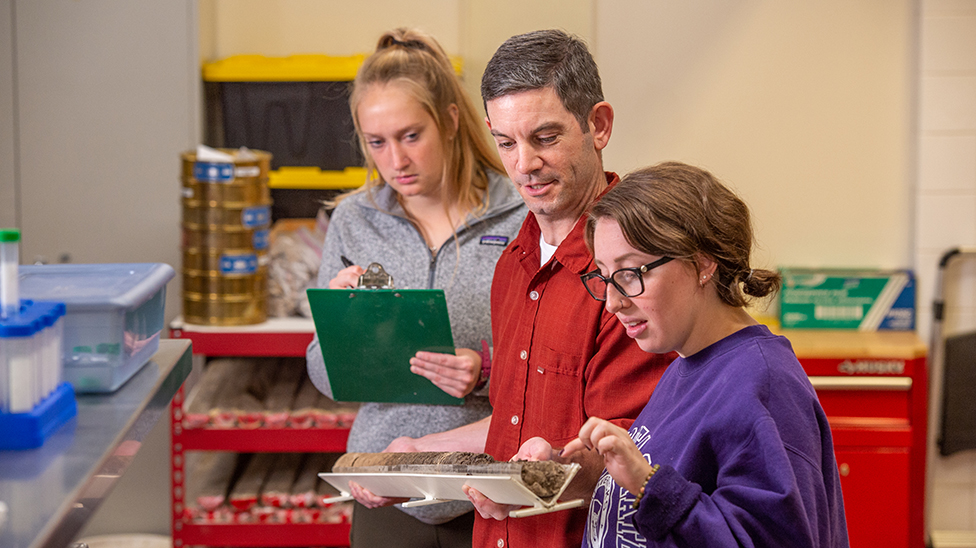
Earth Science
The Earth Science program offers an interdisciplinary study of Earth's systems, including the atmosphere, biosphere, cryosphere, geosphere, hydrosphere, pedosphere, and cosmos, through courses in anthropology, astronomy, biology, chemistry, geography, geology, and physics. This comprehensive approach, combining hands-on training with a focus on contemporary environmental issues, prepares students for the workforce or graduate study.
Careers in Earth Science
Earth Systems Science is a STEM field that utilizes our understanding of the various interconnected systems on Earth to address major environment problems of our time. Overall, Earth Scientists are seeing growth in job availability and the U.S. Bureau of Labor Statistics projects the job outlook to grow through 2030.- Natural Resource Management
- Meteorologist/Climatologist
- Environmental Scientist/Consultant
- Conservation Scientist
- Educator (Professor/K-12)
- Geomorphologist/Hazards Scientist
- Earth Scientist
Potential Salary
Median Salary $92,580
Earth Science Degrees at MSU
Earth Science Teaching 5-12, Bachelor of Science
Earth Science Teaching 5-12 provides students with the background knowledge and training to acquire teaching licensure in the state of Minnesota in Earth and Space Science.
Earth Science, Minor
Earth Science Minor is focused on providing a basic training for students in Earth Systems Science. Students learn about Earth’s interconnected physical systems/processes and human-environment interactions like soil degradation, natural hazards, climate change, and natural resource management.
Earth Science Teaching 5-12, Bachelor of Science
Earth Science Teaching 5-12 provides students with the background knowledge and training to acquire teaching licensure in the state of Minnesota in Earth and Space Science.
Earth Science, Minor
Earth Science Minor is focused on providing a basic training for students in Earth Systems Science. Students learn about Earth’s interconnected physical systems/processes and human-environment interactions like soil degradation, natural hazards, climate change, and natural resource management.
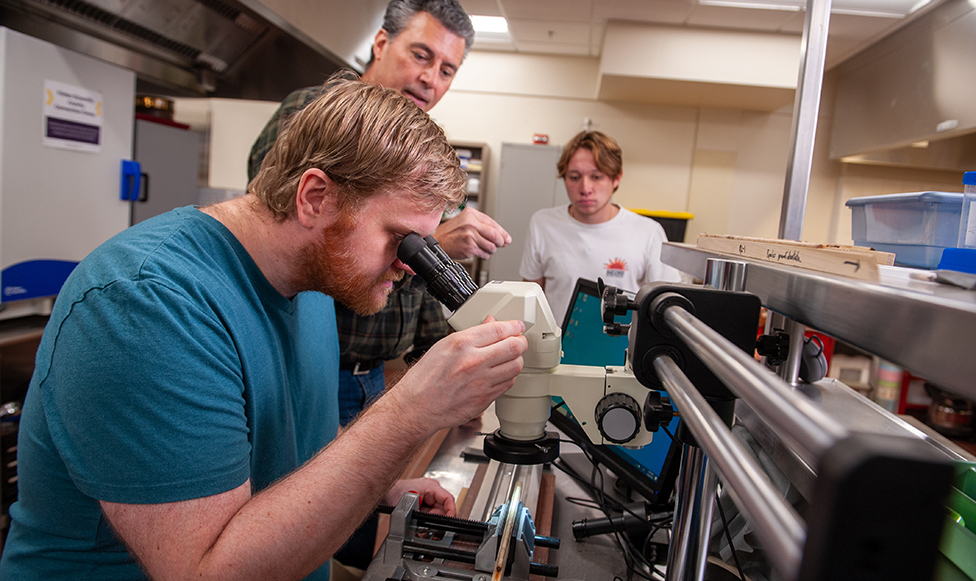
EARTH Systems Lab
Our lab integrates Earth Science, Geography, and Archeology to prepare students for careers in academia, private business, or government. Through hands-on research, students explore natural processes and their impacts on humans. Research areas include:
- Archeology/Geoarcheology
- Soils
- Climate/Paleoclimate and Climate Change
- Surface Hydrology
- Erosional-Earth Surface Processes
- Geomorphology
- Natural Resources
- Natural Hazards
- Human-Environment Interactions
Learn More
Archeology, Geography, and Earth Sciences (AGES) Club
The AGES Club offers students in archeology, geography, and earth sciences opportunities for field experiences, training, and networking. We support academic and professional development and welcome all students, regardless of their background or level of interest.

K-12 Teaching Programs
In collaboration with the Department of K-12 and Secondary Programs (KSP), Minnesota State University, Mankato's teaching content areas support licensure candidates in building the knowledge, skills and dispositions necessary to meet the needs of today's diverse K-12 learners and partner school districts.
Related Programs
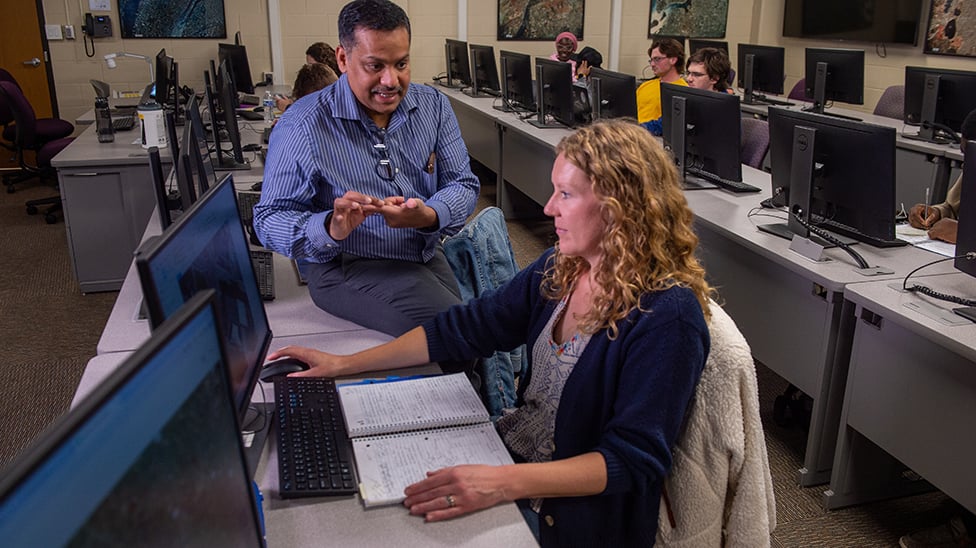
Geography
Geography explores spatial patterns and real-world problem solving through geospatial tools like GIS, GPS, and remote sensing, with options to pursue the Geospatial Science BS or add a flexible Geography minor.
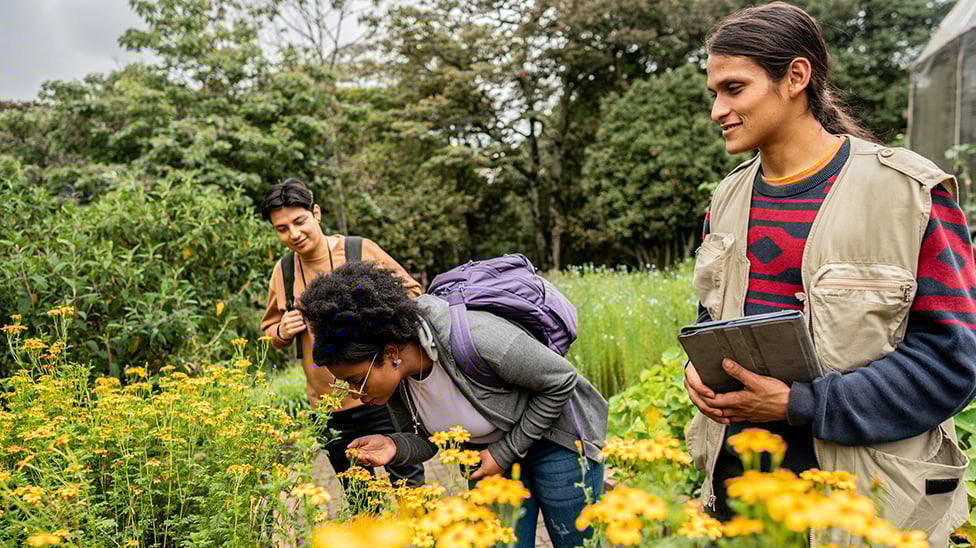
Environmental Science, Bachelor of Science
Environmental Sciences is an applied science designed to study interactions among biological, chemical and physical components of the environment.

Biology - Organismal and Ecology
The Biology BS: Organismal and Ecology emphasis is for students fascinated with the diversity of living things and the biology of populations, communities, and ecosystems. An in-depth understanding of these topics is critical given the changing nature of our planet. Designed for students interested in employment with a government agency (e.g., the Department of Natural Resources), consulting firms, as fisheries or wildlife biologists, animal care technicians and husbandry, and pre-veterinary students.
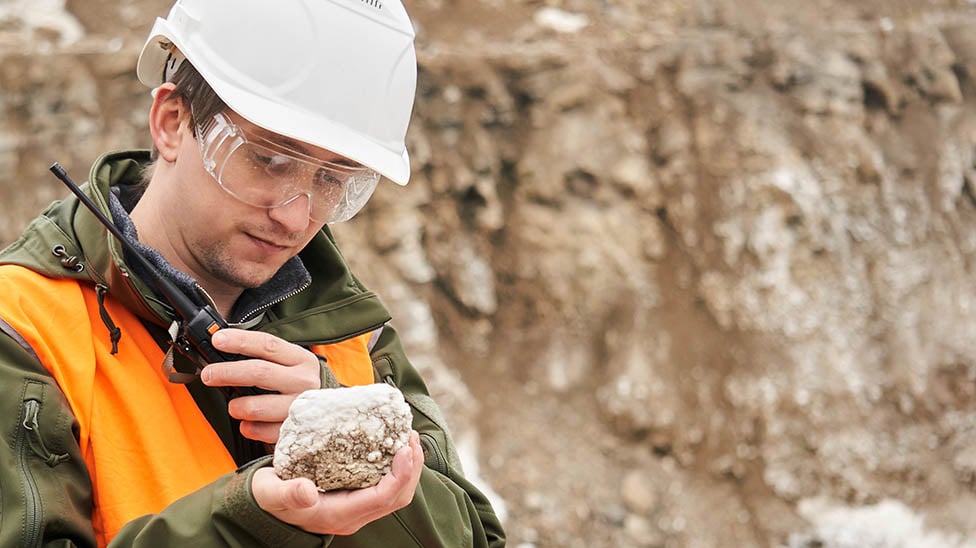
Geology
Geology is the study of the Earth, its materials, and its processes. It concerns itself with solving basic scientific problems and utilizing knowledge of the Earth for the benefit of society.
Department of Earth Science
College of
Humanities and Social Sciences
The College of Humanities and Social Sciences is an inclusive community of diverse learners seeking to examine, engage with and transform the social world while nurturing creativity and innovation. Our programs build a foundation of knowledge that adapts to a constantly changing society.
Learn More About the College of Humanities and Social Sciences