
A Major Figure in Robotics
January 05, 2026
Published In: Today Magazine
Bhushan Dharmadhikari’s expertise helped the University establish a robotics major
By Joe Tougas ’86
In 2019, Bhushan Dharmadhikari started at Minnesota State University, Mankato to teach courses in the Department of Electrical and Computer Engineering and Technology. He wound up being instrumental in creating a new major.
Shortly after he arrived at MSU, he was asked if he’d be interested in taking over the University’s small automation lab. The faculty member who had been overseeing it had retired.
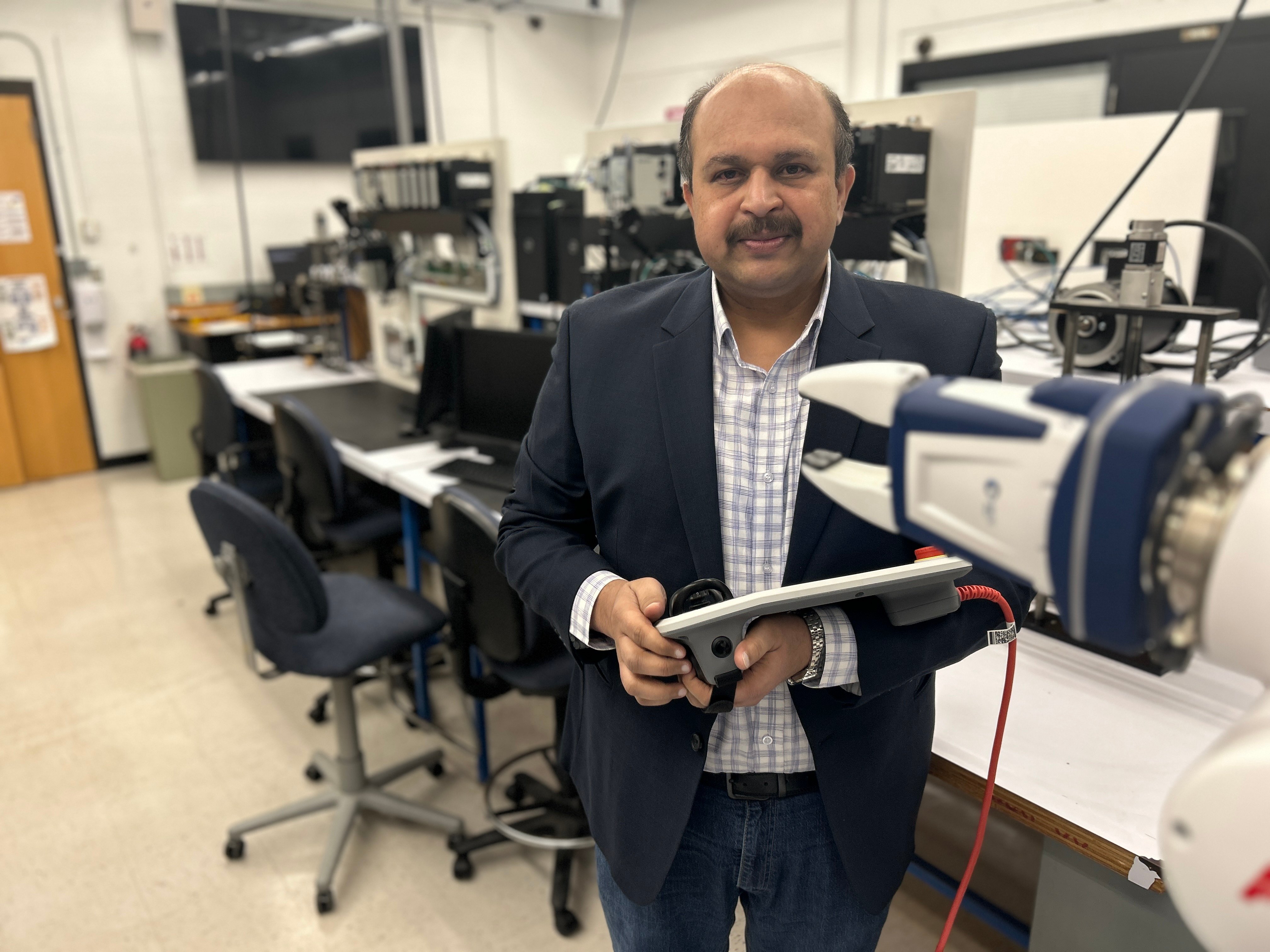
As it turns out, Dharmadhikari was the ideal person to ask. Before arriving at MSU, Dharmadhikari worked as a postdoctoral fellow and teaching instructor, managing and maintaining the automation lab at the University of Bridgeport in Connecticut. At the same time, he was doing research in nanotechnology.
“It led nicely to the experience here,” he said. “That’s how I developed the automation lab here.”
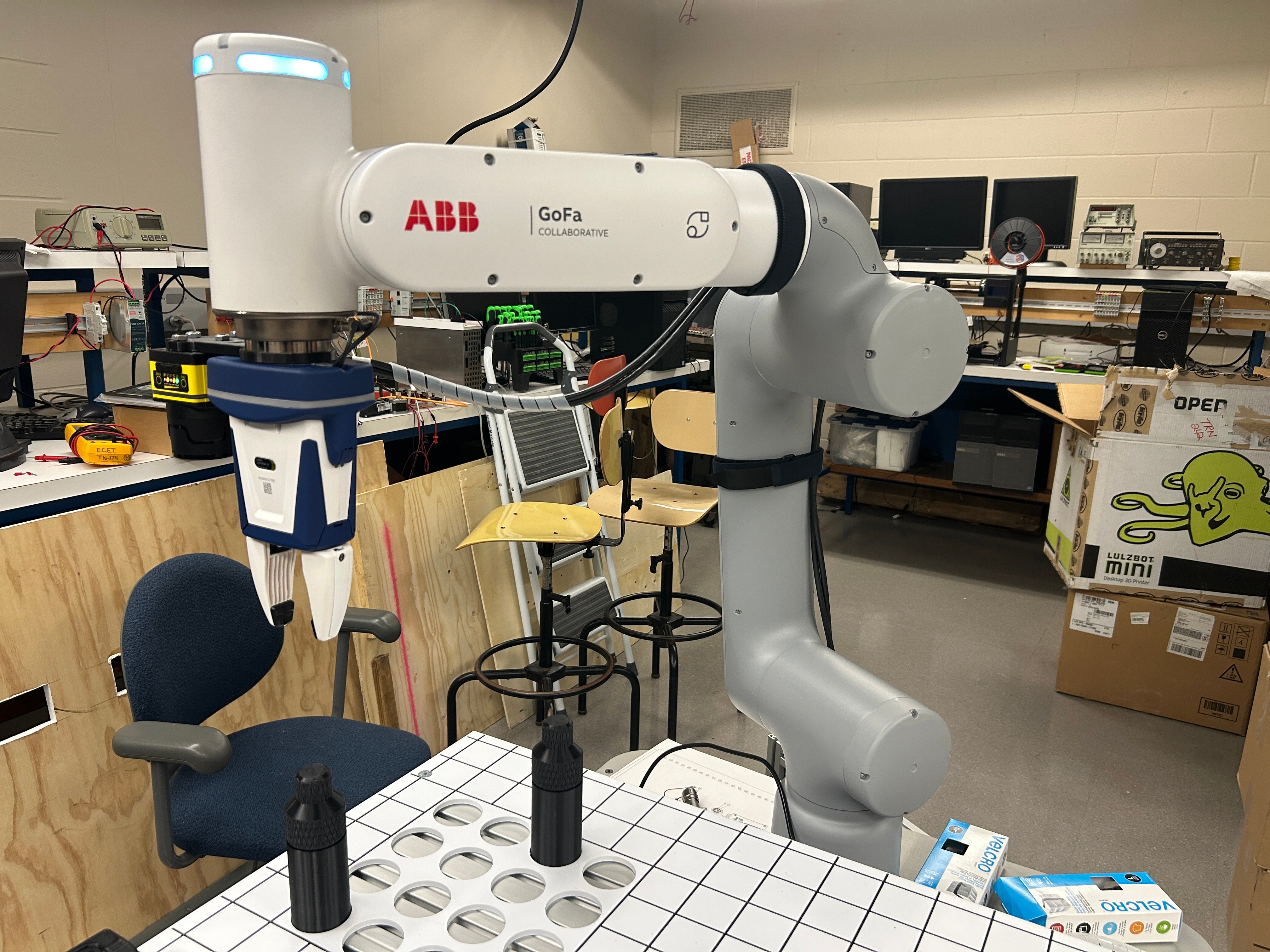
In his six years, Dharmadhikari has overseen a significant growth of the automation lab, where students today are able to work with two collaborative robots from ABB, a global technology leader in electrification and automation. Collaborative robots—or cobots—are designed to work alongside humans, supplementing their tasks versus replacing them. In working with the cobots, students are learning features such as motion control, vision sensing and other automation components that make the robots collaborative.
As of fall 2025, MSU now offers an undergraduate major in Robotics Engineering, the first such degree in Minnesota. The major and lab will better equip and train students who are pursuing what is already seen as a lucrative and in-demand set of skills.
According to a December article in The New York Times, the manufacturing job market is particularly promising for young people with skills in automation and robotics. As factories become more high-tech, new jobs are opening up in robot repair and mechatronics (which, like the major itself, combines mechanical engineering with electronics and computer engineering).
Mechatronics technicians with a two-year associate degree are earning in the neighborhood of $70,000; those with more education can make more than $100,000, according to the article.
Students in the robotics engineering major will, in their first year, cover the basics of electrical and computer engineering. Beyond that, the courses will become more specialized—from the fundamentals of robotics to robotics programming and how artificial intelligence plays a role in machine learning.
“Going forward, there will be specializations, and those may be having a humanoid motion, a bi-pedal robot. There may be elective specializations for robotics in medical applications,” Dharmadhikari said.
“This is the future.”
Beyond the classroom, first-year robotics engineering students and members of the MavRobotics student organization have applied for an IEEE (Institute of Electrical and Electronics Engineers) Robotics and Automation Society student chapter, of which Dharmadhikari would be the mentor.
In the chapter, students can form teams to design, build, and test robots for competitions and challenges. The group would support hands-on workshops, team-based projects, and travel to robotics conferences and technical workshops.
Competitive robotics, Dharmadhikari said, “creates a pathway for students to develop leadership, teamwork, and real-world engineering skills.”
A Legacy Living on for Future Peacekeepers
After alum and police Matthew Ruge was killed in a domestic violence standoff, his family honors his memory with a law enforcement scholarship. By Robb Murray ’96
Finding the CURE
Finding the CURE. Program Gives Undergraduate Researchers More Opportunities. By Grace Brandt '13.
A Reputation Here, There and Everywhere
A Reputation Here, There and Everywhere. From the air above to business below, Minnesota State Mankato enjoys a widespread reputation across disciplines and across borders.