
Busting Myths, One Episode at a Time
February 04, 2026
Published In: Faculty , Research , Current Faculty or Staff
New psychology podcast from Minnesota State Mankato challenges common beliefs about full moons, polygraphs, “opposites attract,” and more.
By Joe Tougas '86
Two Minnesota State Mankato psychology faculty members have launched a podcast that might break your heart if you’ve always believed:
- Opposites attract.
- The full moon has weird powers.
- Polygraphs are reliable.
The podcast, “Brains Vs. Beliefs: Debunking Psychological Misconceptions” takes on common assumptions passed along from sources such as a family member, a neighbor, a school teacher from way back ... everywhere but science.
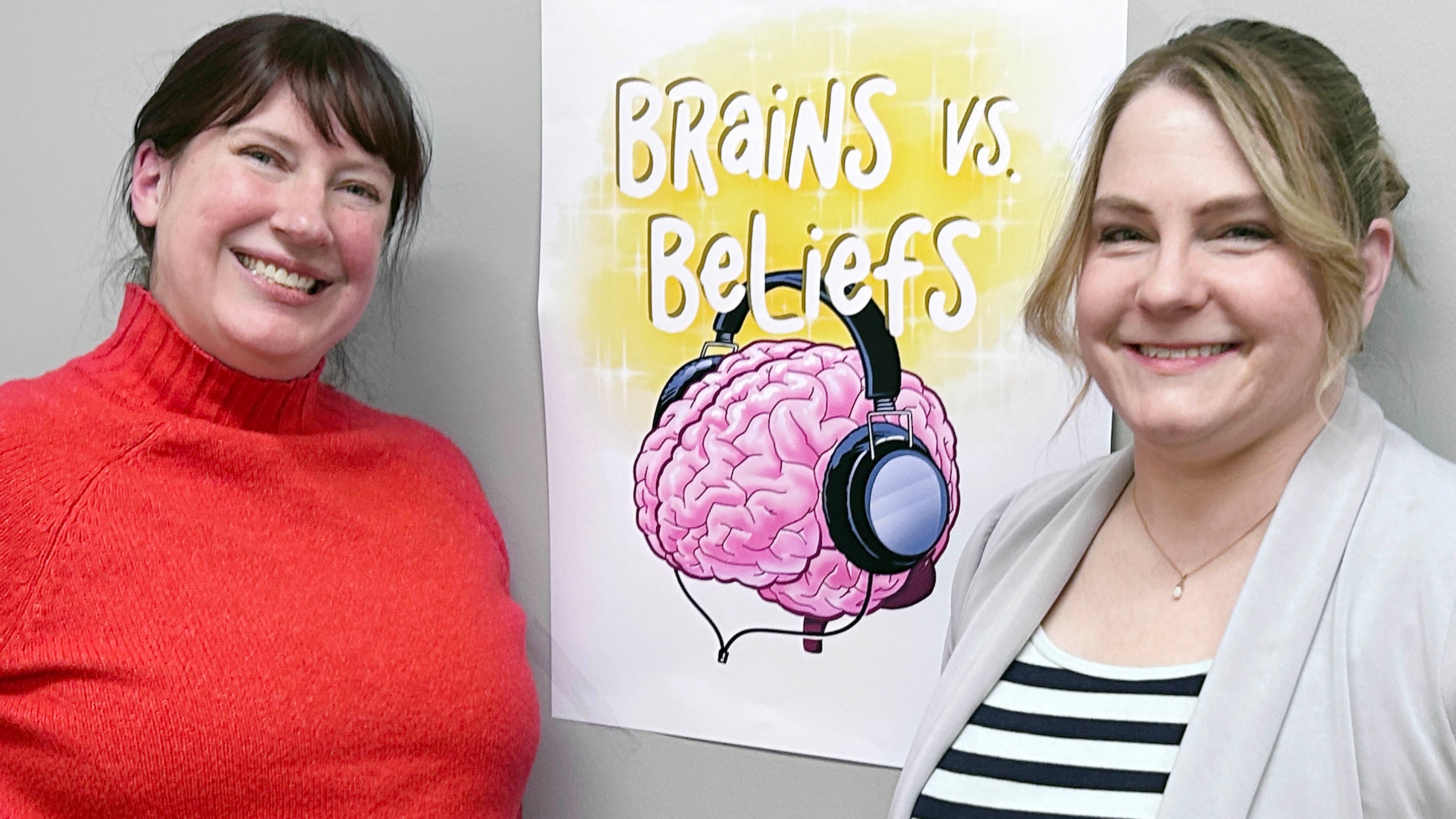
“You can believe the full moon affects behavior, that’s fine,” said psychology professor Emily Stark, who with psychology department chair Karla Lassonde hosts the podcast that debunks such longstanding beliefs.
“But if you’re a police department and you’re staffing up on weekends when there’s a full moon and spending taxpayer dollars on that, that’s a different type of thing. So it is important to think about these misconceptions.”
Since November, when the podcast was launched on a web site the two created, CommunicatingPsychologicalScience.com, each episode describes these mistaken beliefs, explores their origins and how research by others has been used to test and disprove them. Thus far, episodes have dealt with the idea that opposites attract in romantic pairings; that the full moon affects human behavior; and that people learn best when teaching styles accommodate their preferred ways to learn. Upcoming topics will include the belief that playing classical music for babies makes them smarter and the reliability of polygraphs.
Although the research on these topics has been done and communicated for years, Stark and Lassonde find they bear repeating given the prominence and longevity of these misperceptions. In that regard, it’s similar to teaching in the classroom.
“The idea of debunking myths is absolutely not new in psychology,” Stark said. “Some of the research for opposites attract, that goes back to the 1980s, we’ve been doing relationship research for a while. We know that’s not true. But it’s not like we can say ‘That’s not real – next.”
Lassonde calls them “common sense beliefs,” and to buy them is only human.
“The problem with psychology is we all can be [novice] psychologists and we can take people’s word for it. We also know that the way that people get their information is ‘My neighbor said so, or my doctor said so. And while some of that is good, we’re here to say ‘Here’s the thought you’ve had that’s been reinforced.”
While they aren’t out to ruin anybody’s fun, it’s nonetheless important to shed incorrect assumptions, Stark said.
“How you think about it can affect behaviors. So if you have a mistaken belief, you might be investing time, money and energy into something that is not super helpful.”
Stark has had a trial run of sorts by using the topic in psychology classes.
“I’ve done, in a couple classes, a misconceptions project. The [students] pick one, and they have to find how it’s talked about in pop culture, find one study that has tested this and explain it,” Stark said.
“I think they’re always impressed – it’s not that hard [to debunk these ideas] if you put a little thought into it and see what these researchers said. I think that suggests there’s interest. I mean, if college students think it’s cool, I would think the general public will find something to resonate with this.”
From Discarded to Art
FROM DISCARDED TO ART Liz Miller’s ‘Atlas’ will continue in a fall residency