
Digging Deeper
November 13, 2026
Published In: Today Magazine
For MSU anthropology professor Ron Schirmer, archaeology is about more than understanding the past. It’s about serving students and communities in the present.
By Joe Tougas '86
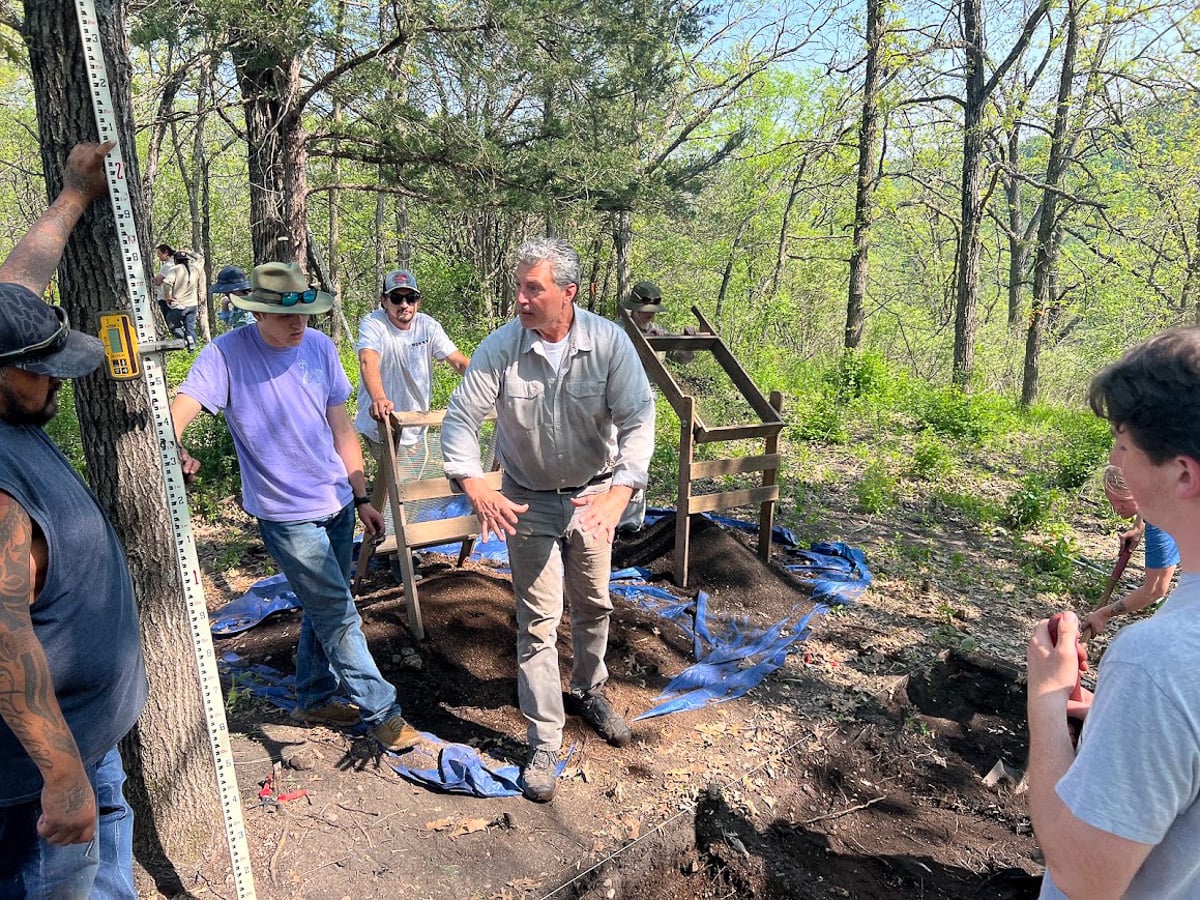
For years, MSU anthropology professor Ron Schirmer has led student workers on archaeological projects that have benefited Minnesota cities, churches and Native communities alike.
His recent work has helped the Prairie Island Mdewakanton Dakota obtain sacred remains and artifacts that belonged to the community. He’s also helped the tribe identify and research the thousand-year-old Belle Creek site, a Dakota village that holds an estimated 68 burial mounds near Red Wing.
Through grants or other means, most projects pay, and Schirmer said he often defers payment for himself so more can go to the students and colleagues working with him. The reward for him, he said, is how the projects fit into the lifelong fascination with hearing and understanding the stories of elders, beginning with his own.
“I almost didn’t have a choice in becoming what I became,” he said, “because I’m living now what I was raised to do.”
FAMILY CONNECTIONS
Schirmer grew up in the central Wisconsin town of Wausau, a setting rich with Polish and German immigrants. His family took history seriously, with its German heritage front and center. His grandparents spoke the language and his parents were everyday historians, taking their sons on trips to Michigan ghost towns, walking through old cemeteries and keeping an abundance of antiques in the family home.
“I grew up with this very intense relationship between my understanding of me as a person and having a relationship to these things from the past that have meaning,” Schirmer said.
He was also raised to respect older residents of the neighborhood, and also to help them.
“If you were young and able, you go to your neighbors and you ask if there’s something you can do for them. And if you saw Harriet Grunenberg outside trying to shovel, you’re going to say ‘Mrs. Grunenberg, please go sit down, let me shovel this for you.’ That whole ethos of a personal relationship to ethnicity, of a personal relationship to the past, of a personal relationship to the importance of service— that was all instilled in me right from my very early life.”
Through his childhood, stories spurred his imagination. Stories such as those told by his grandfather, whose own father immigrated in 1889 to Chicago and while there witnessed the first automobile ever driven down a street in the city.
Schirmer’s grandfather left school in eighth grade to become a full-time baker in the city. After work each day, he’d grab a little bit of sleep and then go out again to make some money at the nearby pool hall.
“He hustled pool at a facility where the pool hall was actually a front for a speakeasy that his older sisters—Great Aunt Edna and Great Aunt Frida—were waitresses at,” Schirmer said. “They had the most wacky stories, and it was all fun.”
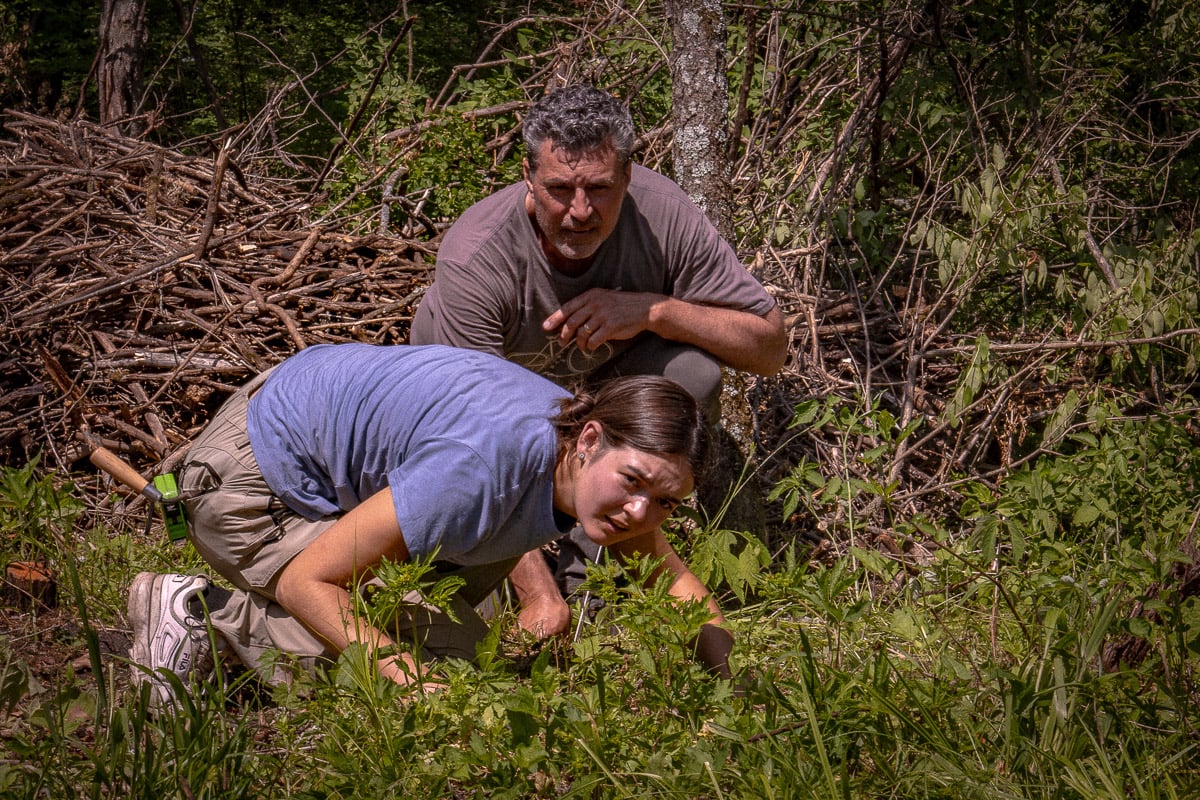
Now in his 24th year of teaching anthropology and archeology at MSU, Schirmer’s own storytelling is a key part of his work, which he aims to keep both light and compelling.
“A lot of what we deal with is very serious stuff. A geophysical survey over someone’s graves—those are people and their descendants are there and those bodies are there and it needs to be done in a respectful way,” he said.
“I always try to make sure that the students get all the serious stuff, but I’m not trying to bash them about the head with the gravity of the work we’re doing. Yes, we’re doing very important work but that doesn’t mean we can’t have a good time with it.”
Jackson Davis is a third-year graduate student in the applied anthropology master's program. Davis received his bachelor's degree in anthropology with a minor in geography from MSU in 2023.
“The way Ron approaches teaching was one of the primary reasons I decided to come back for graduate school,” Davis said. “As a student, you can't help but be captivated by what he's saying. He will provide real-world examples of what he is lecturing about, showing us that what we are learning does have practical applications.”
Schirmer said he incorporates some of his background in theater and music into his communication style, “to make sure when I’m telling a story I’m doing it in at least an interesting if not an amusing way. And for some folks, they’re like ‘Oh that guy’s funny, he tells great stories.’ And others are like ‘Oh my god, he’s telling another story…’”
MSU geography professor Phil Larson has worked with Schirmer on a number of projects; he has seen the impact Schirmer has on his students.
“Overall, Ron's approach is incredibly impactful and engaging,” Larson said. “His students thrive and find employment upon graduation. He has a small army of former students out there in state and private entities now serving a variety of communities all because of how effective he is at being an educator and mentor.”
OLD WAYS AND SACRED SITES
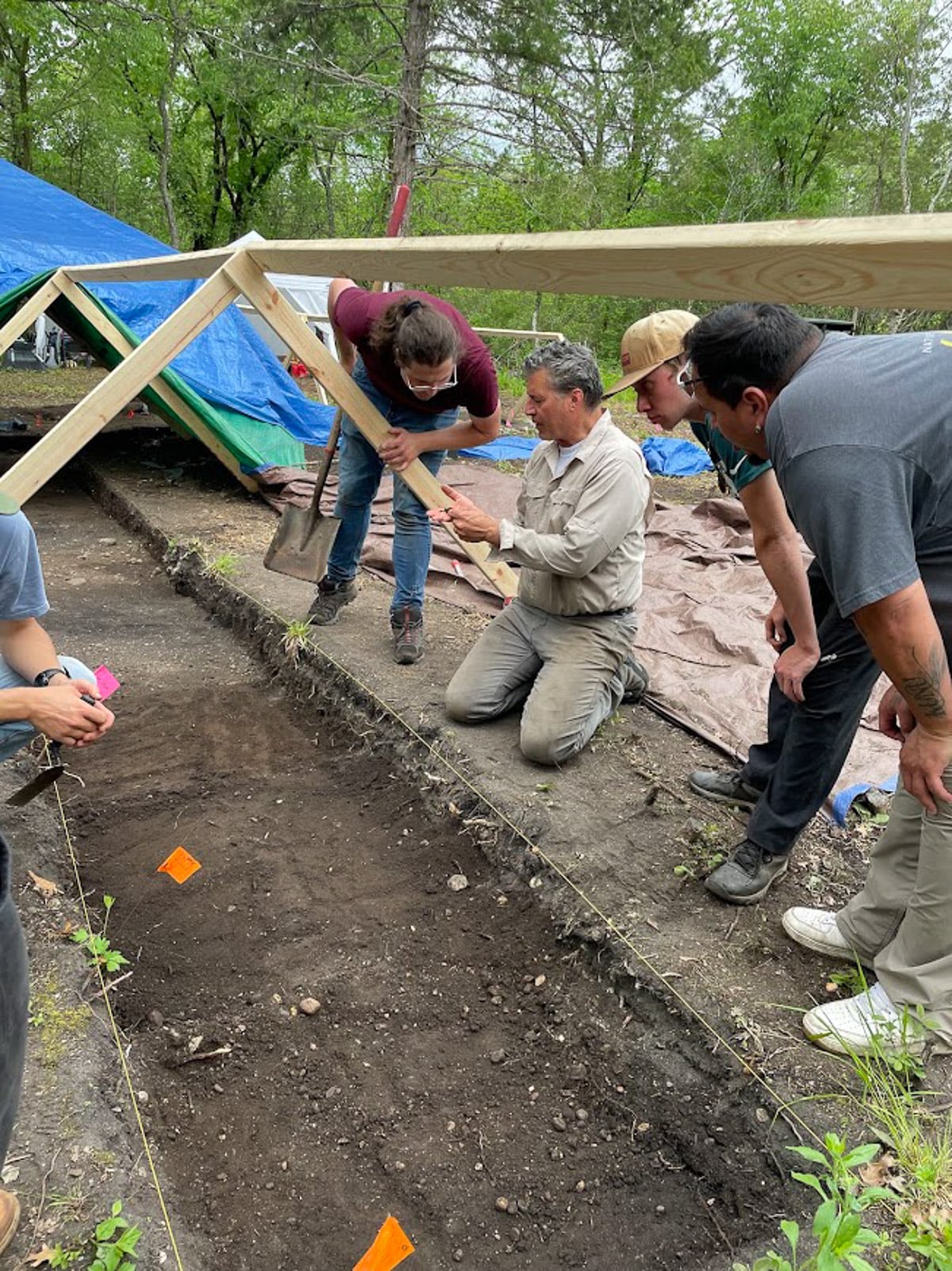
The respect and fascination for his elders that colored Schirmer’s upbringing has a direct link to his success in working on historic research for communities throughout Minnesota, especially Native communities.
“Because that’s an oral-tradition culture. And having respect for your elders, listening to their stories, valuing their stories and making sure you are there to help elders and be a part of helping your community out, those are all incredibly important values for native communities.”
MSU has one of only two graduate-level archaeology programs in the state, which means Schirmer and his colleagues in the department are routinely sought out by cities, native communities and churches to help determine the stories below the surface and in the past.
One project underway is a geoarchaeological survey in Grand Marais that will, among other things, help guide the city’s response to development demands along the North Shore. While that area is undoubtedly the site of Native and European history, not much archaeological study has taken place there. It’s a state-funded project administered by the Minnesota Historical Society in collaboration with the office of the state archaeologist and the Minnesota Indian Affairs Council.
Schirmer, along with students and MSU colleague Andy Brown have for years researched with and on behalf of the Prairie Island Native community. They were instrumental in the 2025 return of sacred artifacts and remains that had been stored elsewhere in Minnesota. It was one example of Schirmer providing a beneficial link between academic or state entities and Native communities.
“Because of my academic training, I can write very well. And when, for example, a Native tribe learns that some sacred object or some relatives, some of the bones of their ancestors are held in some museum or other, man, do I ever know how to write the kind of documents that the tribes need to get that stuff back.”
“What is most amazing about this is that he prioritizes doing it with students,” Larson said, “and making the important work a part of the learning experience for all the students studying archeology under his guidance.”
BELLE CREEK
Known in the area as “Doc,” Schirmer was consulted in 2017 about land for sale in an area near Red Wing and the Prairie Island community. The realtor notified the Prairie Island tribal president at the time that it was an archaeological site that may be of some interest. The president called Schirmer with the parcel numbers. Schirmer passed them along to Brown (“he’s a wiz with mapping,” Schirmer said.)
“He got on the phone and said ‘Ron, it's Belle Creek.’
The area was known to have 68 Dakota burial mounds dating back more than 1,000 years. And of particular interest was its previous lack of excavation or disturbance.
“In archaeological legends, everybody has talked about Belle Creek forever,” Schirmer said. “But no archaeologist had been out there since 1885. The landowners would never let anybody go and dig there,” Schirmer said.
He encouraged the tribe to purchase the land, which includes remnants of a tribal village and burial sites. Today, Schirmer and students from MSU collaborate with the Prairie Island Tribal Historic Preservation Office to do research on the area that treats the land carefully and respectfully.
“The old approach was, ‘Well, let's take a grader or a bulldozer out, and we'll just kind of scrape it off and see if we see any bones.’ And for native folks, that's like, ‘What are you doing?’ … They don't have to do that. You don't have to disturb a sacred place to understand that it's still there.”
“Ron is held in incredibly high regard with Dakota communities in the state,” said Larson. “He has developed an intimate, familial-like relationship. They inherently trust and rely on him for this work and Ron places immense personal and professional importance on not only maintaining but continuing to build that trust.”
As he approaches a quarter century of teaching, Schirmer said he has the best job in the world: “I get to do things that mean something to the people, to the students, to the communities, that mean something to me, that help me feel fulfilled.”
“Ron was put on this Earth to do this,” Davis said “He puts immense care into his work. He cares about each of his students. He pushes all of us to be the best versions of ourselves. For the rest of my career I will be asking myself, ‘What would Ron do?’"
A Legacy Living on for Future Peacekeepers
After alum and police Matthew Ruge was killed in a domestic violence standoff, his family honors his memory with a law enforcement scholarship. By Robb Murray ’96
Finding the CURE
Finding the CURE. Program Gives Undergraduate Researchers More Opportunities. By Grace Brandt '13.
A Reputation Here, There and Everywhere
A Reputation Here, There and Everywhere. From the air above to business below, Minnesota State Mankato enjoys a widespread reputation across disciplines and across borders.