
From Discarded to Art
January 23, 2026
Published In: Faculty , Current Faculty or Staff , Today Magazine
Liz Miller’s ‘Atlas’ will continue in a fall residency
By Joe Tougas ’86
Liz Miller has exhibited her sprawling, colorful and intricate works around the world, often supported by prestigious grants, including two from the McKnight Foundation.
In fall of 2026, Miller, a Minnesota State Mankato art professor and a celebrated installation and fiber artist, will be spending part of her sabbatical at the Loghaven Artist Residency in Knoxville, Tennessee, along with other visual artists as well as writers and composers.
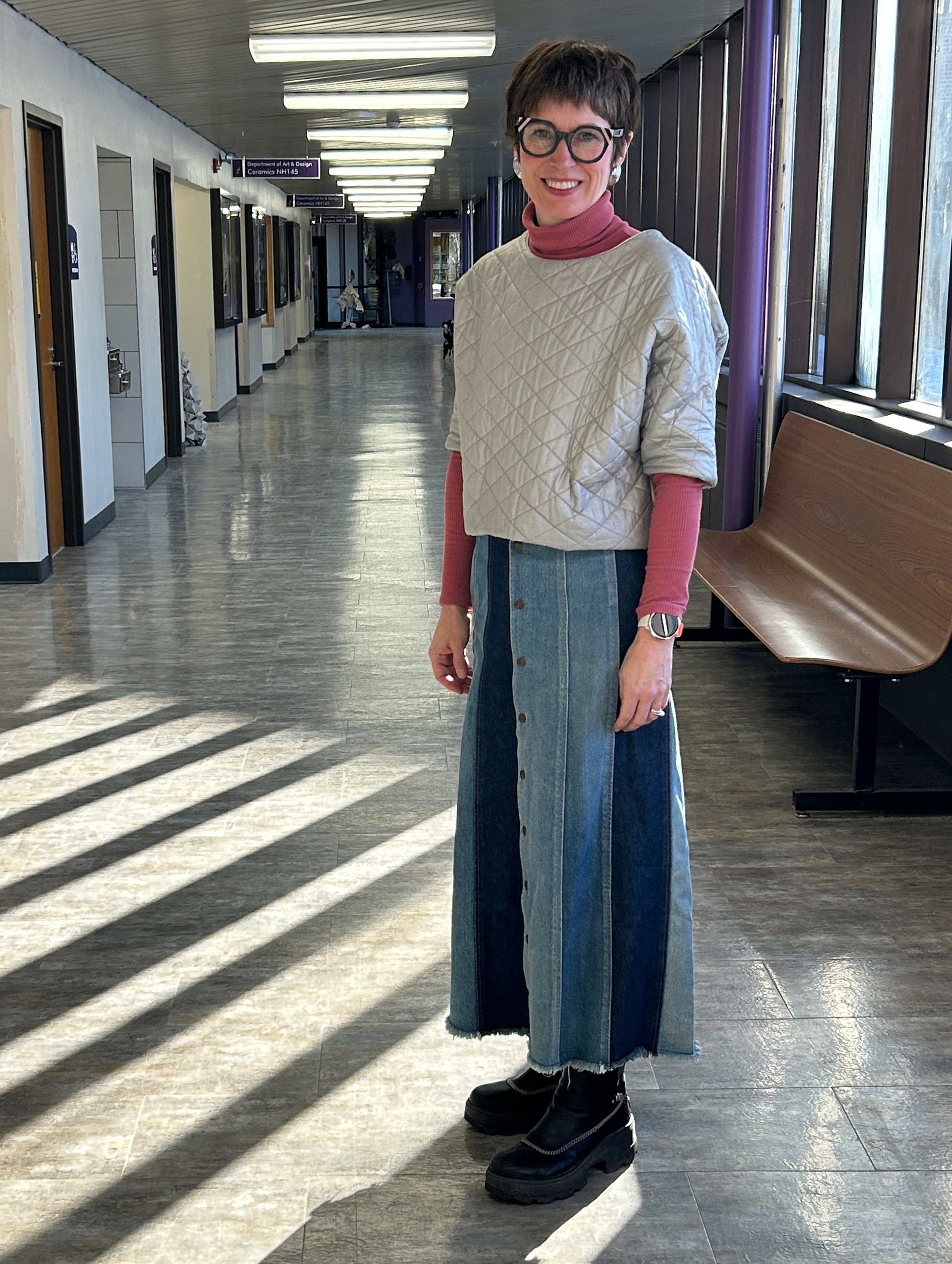
Miller is among 29 artists invited of more than 1,200 applications for the highly selective residency. One of several she’s had in her career, the Loghaven residency will, she said, strengthen her work, connect her with significant artists from around the world and enhance what she shares in her classes.
While in Knoxville, Miller said she’ll likely continue work on a project that is now being shown in Minneapolis, a series titled “Atlas.”
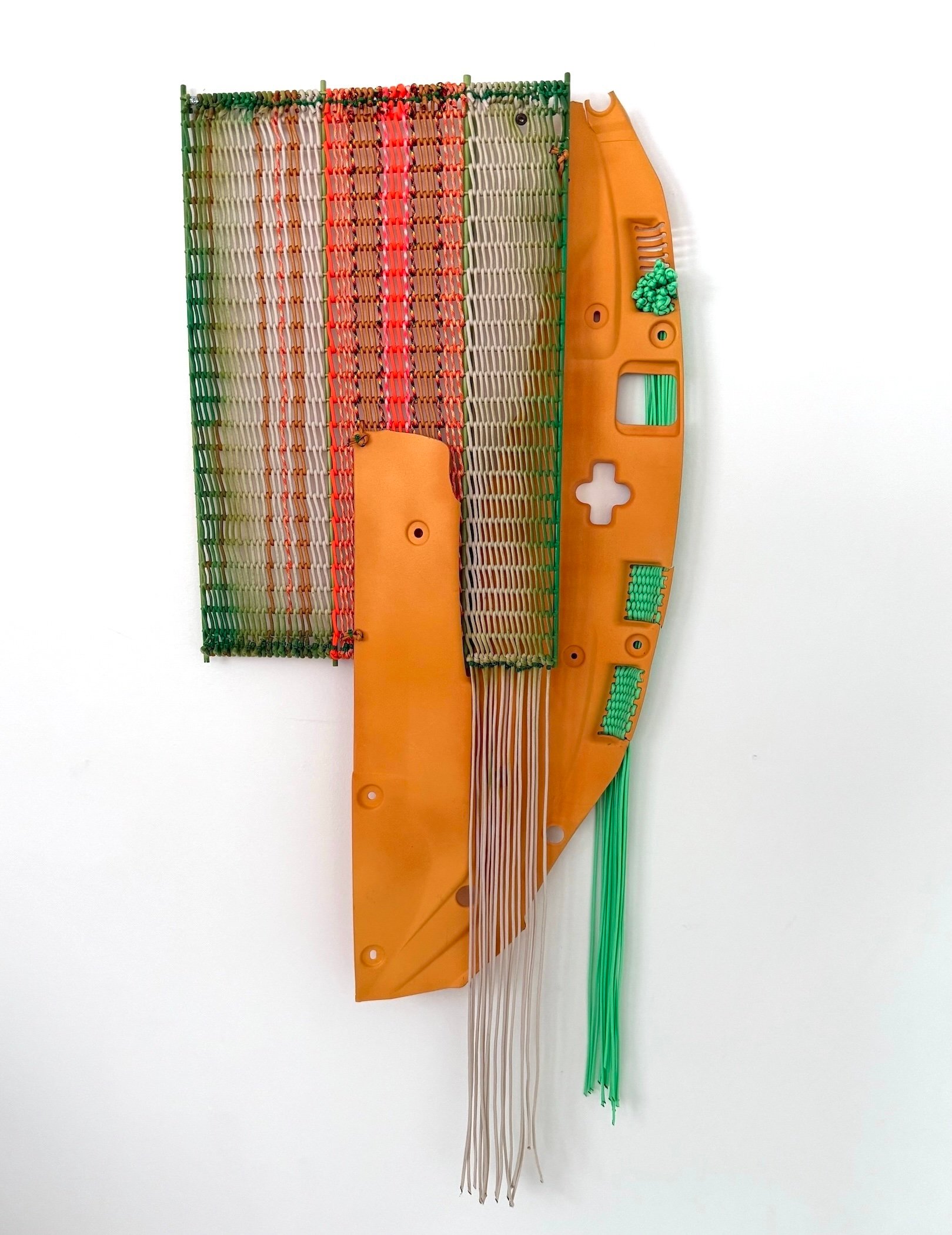
In “Atlas,” Miller takes odd, discarded items that she’s found along roadsides around the country, paints and weaves them among colorful rope and zip-ties them to become wall hangings or larger installations.
The idea sprouted during the pandemic when Miller, an avid runner, noticed bits and pieces along the country roads near her home in Good Thunder, Minnesota. She moved on the idea with a recent road trip that allowed her to collect refuse from 16 states. Her goal is to get all 48 contiguous states represented.
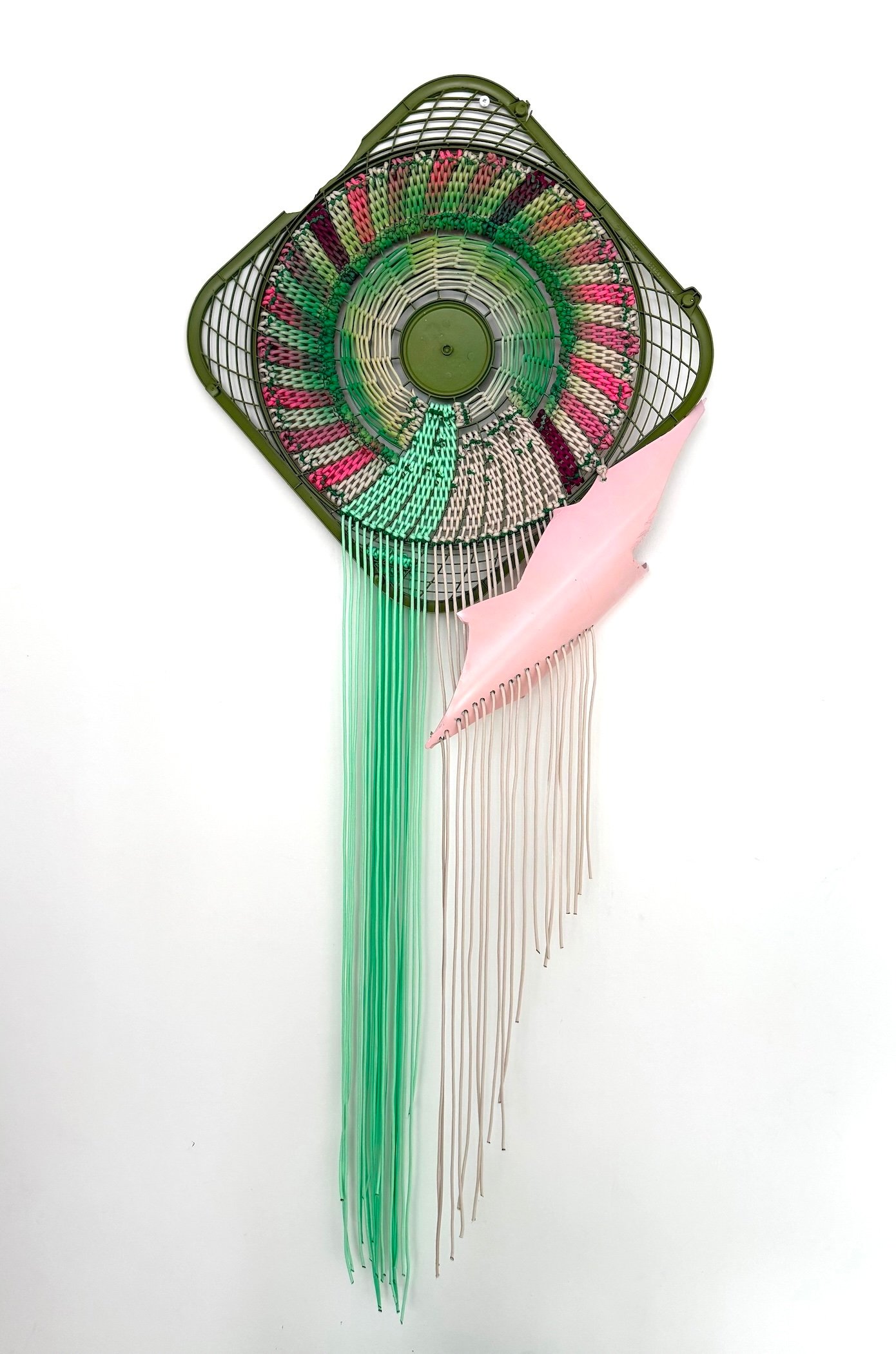
“There are obviously a lot of plastic bottles and cans and stuff, but I was more interested in the other things I was finding, and the fact that this is something that belonged to someone, so what does this say about personal histories, collective history? What does this say about us as a culture?” Miller said.
“I would find pieces of plastic playground equipment that had just kind of been swallowed by the gravel. … So a lot of these objects really do have this sense of time and age and they're degrading a little bit, you know? So I do think that I'm kind of reclaiming these things and framing them, elevating them and embellishing them, making them something that can maybe be seen in a new way.”
Miller is a Twin Cities native who headed east to study at the Rhode Island School of Design. She returned to Minnesota for a master’s degree at the University of Minnesota. In 2005, she was hired to teach drawing at Minnesota State Mankato, where she also incorporated aspects of installation art into her teaching. Soon afterward, now-retired department chair Brian Frink invited her to start an installation program.
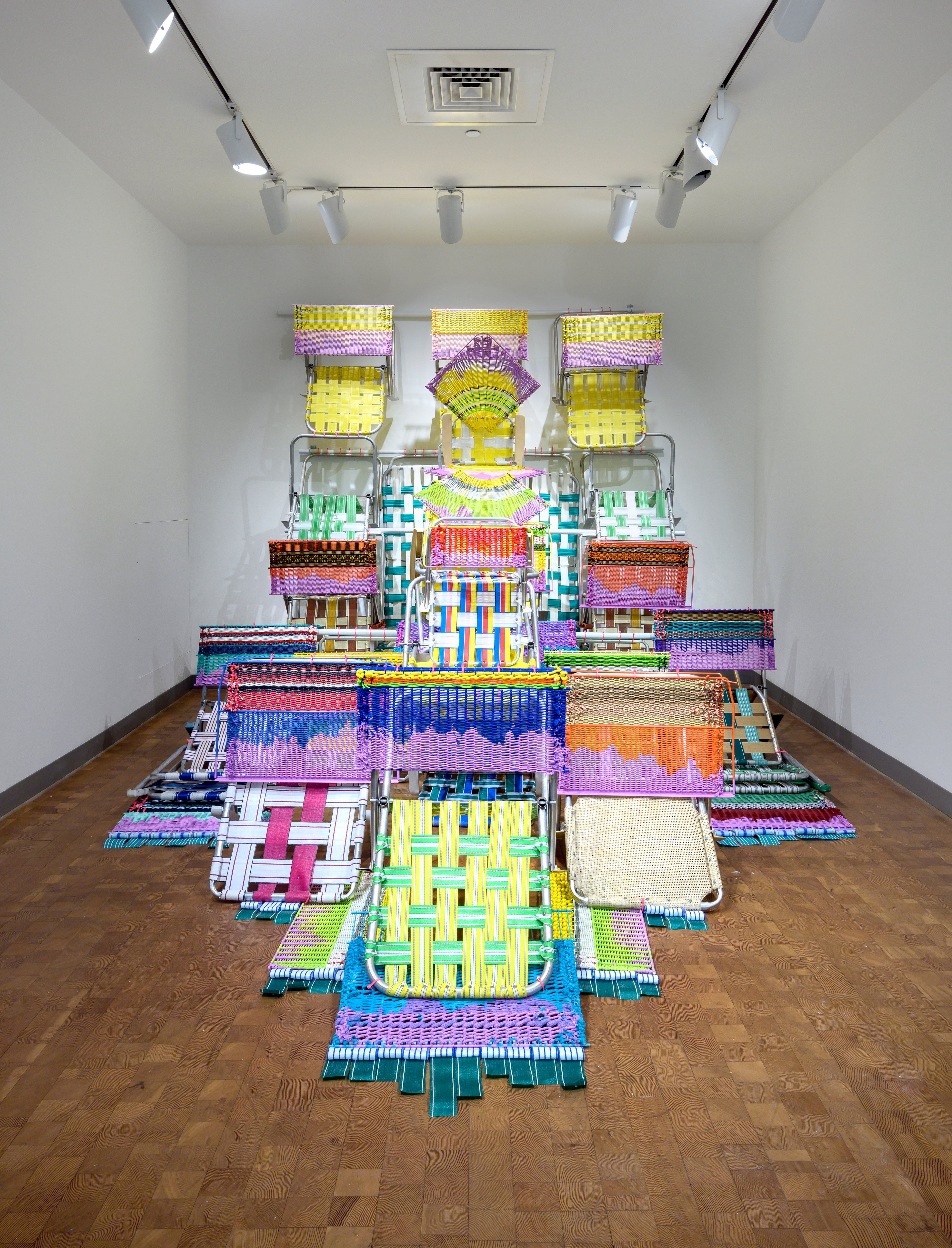
“We wanted to break down some of the barriers between the different areas—painting, graphic design, print making, sculpture, photo, ceramics,” Frink said. “A student could incorporate any of those ways of working into installation art. Liz was the perfect person for this. She is charismatic, energetic and works hard to create relationships beyond the walls of the art department.”
Frink is a fan of “Atlas,” which he describes as “a mishmash of beauty and clunk.”
“The pieces hold a powerful contradiction: the casual violence of objects tossed from cars, fallen from use or simply abandoned, set against the intense care and attention of the artist’s hand,” Frink said. “In refuse, in garbage, in the remnants of pleasure or the broken fragments of technology left in roadside ditches, she finds joy and meaning, bringing it forward, asking us to see what we have chosen to leave behind.”
Now in her 20th year of teaching at MSU, Miller said interacting with art students keeps her sharp in her own work.
“It keeps you connected and curious about facets of your practice,” she said. “Because things ebb and flow in one’s own work. So teaching allows me to connect with things that maybe I haven’t thought about in a while and really engage with them.”
For Miller, the Loghaven residency is an opportunity to create in a new environment, which she says is important for her own art – just as it is for students who arrive to the University’s art department.
“We try to throw them some challenges or curve balls, you know, so they have to respond. That's harder to do when you're older or further in your career and have done something for a long time. … Being in that different setting is great for that.”
A Legacy Living on for Future Peacekeepers
After alum and police Matthew Ruge was killed in a domestic violence standoff, his family honors his memory with a law enforcement scholarship. By Robb Murray ’96
Finding the CURE
Finding the CURE. Program Gives Undergraduate Researchers More Opportunities. By Grace Brandt '13.
A Reputation Here, There and Everywhere
A Reputation Here, There and Everywhere. From the air above to business below, Minnesota State Mankato enjoys a widespread reputation across disciplines and across borders.