
Unearthing a Hidden Treasure
July 09, 2026
Published In: Today Magazine
Professor Beth Wisely brings a world-class mineral collection out of storage and into the spotlight
By Joe Tougas ’86
For nearly 20 years, a vast collection of minerals from across (and inside) the earth has essentially been hidden in drawers and closets at Minnesota State Mankato.
Since the start of spring semester and into this summer, Professor Beth Wisely has rallied students to help organize, label and display an extraordinary collection of specimens that formed millions—and in some cases billions—of years ago.
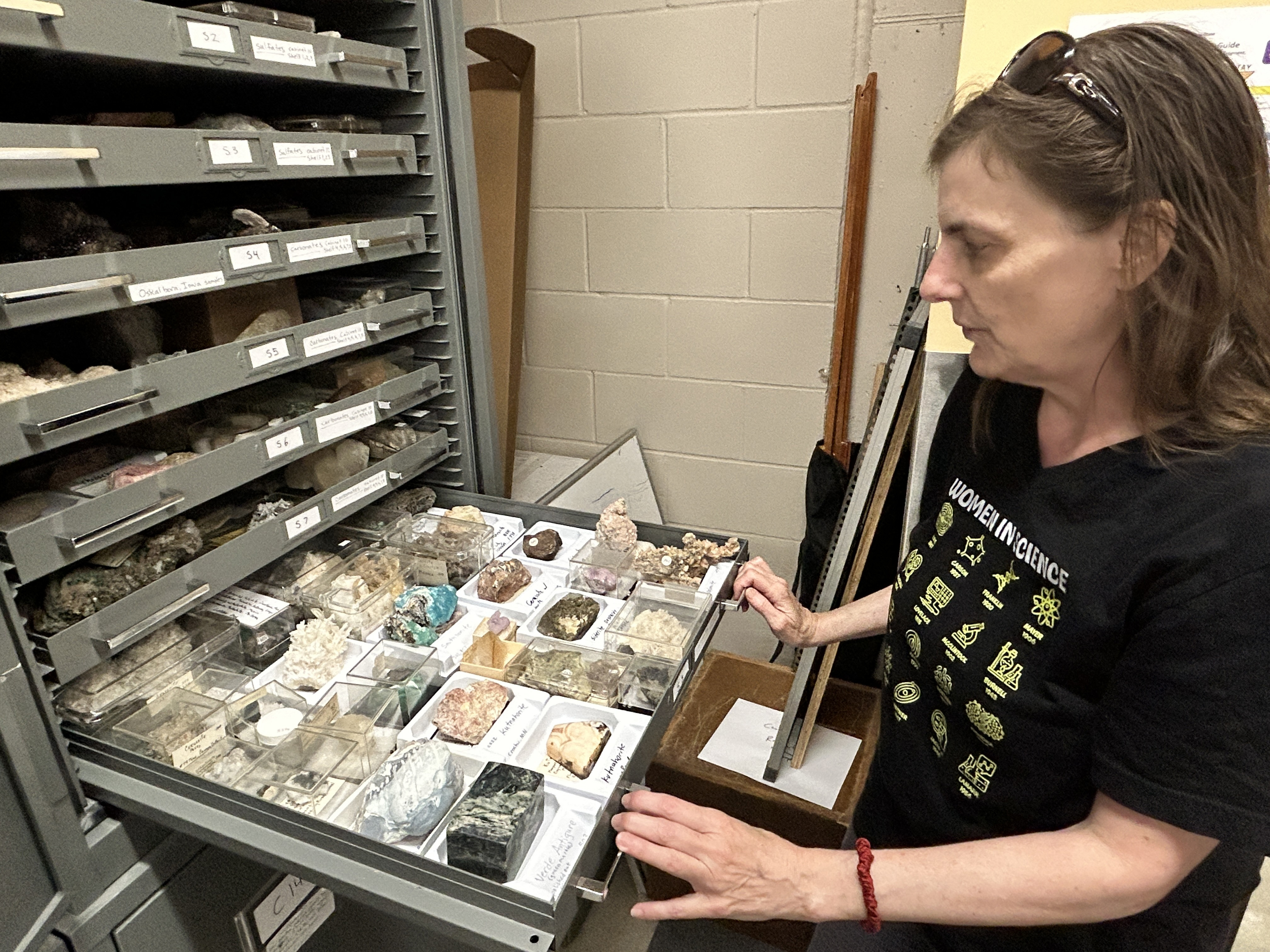
More than 1,000 pieces representing 10 major mineral families arrived by trailer truck in 1997. The historic payload was a gift from the family of James Heles, a Saylorville, Iowa, man who was a pharmacist assistant on the USS Procyon during World War II and later worked as a metallurgist for the John Deere Company.
He was also an avid collector of coins, stamps and minerals. For years, Heles and his family gathered and traded minerals with other enthusiasts from around the world, amassing and labeling a vast collection.
“He built an international trading connection way before the internet,” Wisely said. “So literally, we have in this collection minerals from all around the world.”
When Heles died in 1997, the family sought a home for his mineral collection. Among the family members was Minnesota State Mankato alum Michele Pitschneider, who suggested the collection be donated to MSU’s geology department.
Pitschneider graduated from MSU in 1988 with a double major in business administration and business marketing along with a minor in accounting. When her grandfather died, she was the key to getting his mineral collection brought to MSU.
“The intent was always for the minerals to go to an earth science college,” Pitschneider said. “My mother didn't go to college. My two uncles went to college, but their colleges did not have an earth science-type program. So I was next in line as the eldest granddaughter … and Mankato had an earth science program.”
“This is a precious museum-quality resource,” Wisely said, adding that K-12 education doesn’t touch much on geology. She regularly polls students in her introduction-to-geology courses about any previous geology education. On average, only one or two in a class of 25 say they have some.
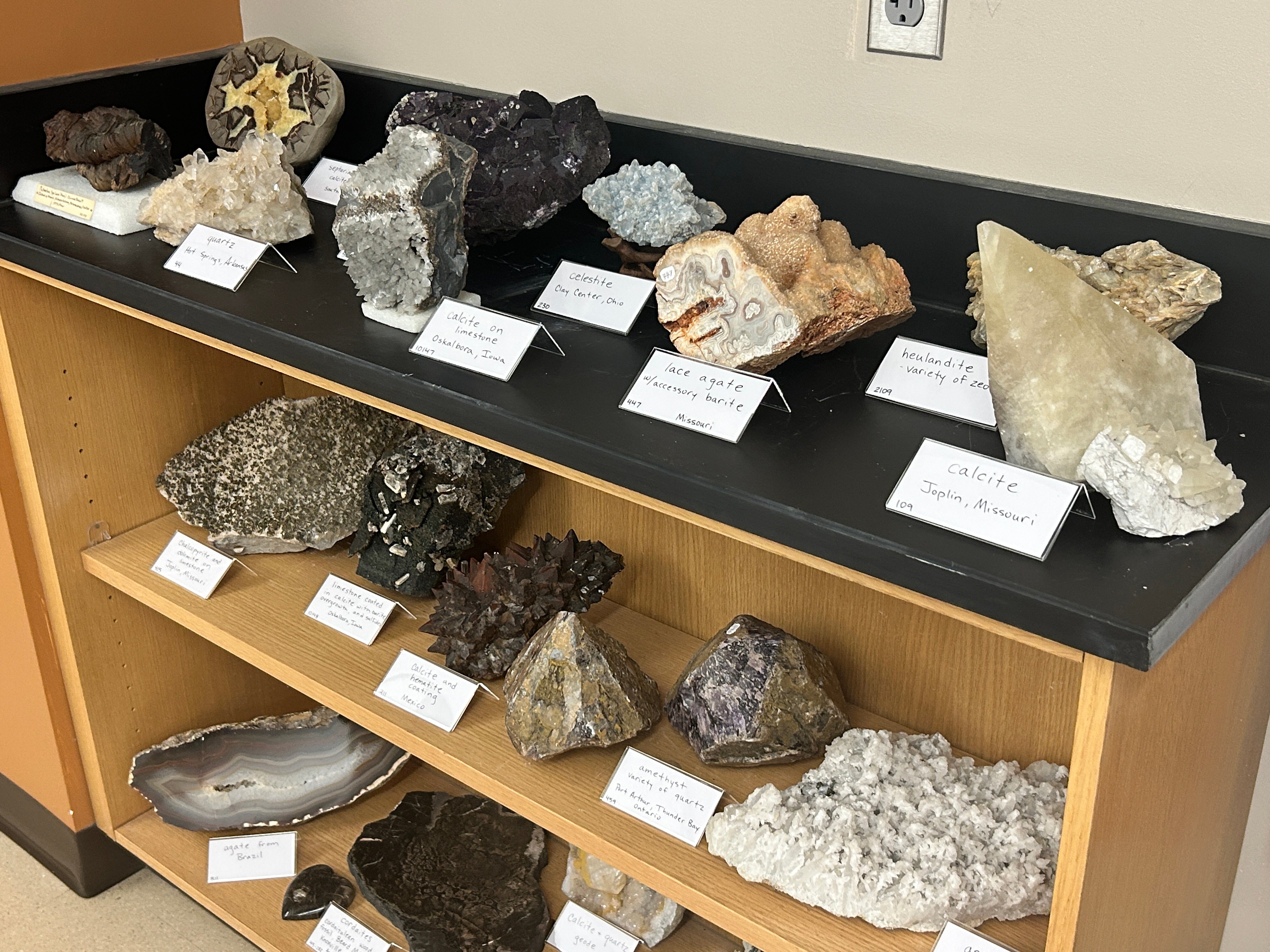
“That’s my other mission, to get geology some exposure, because it’s a really important societal science right now and always has been,” Wisely said. “And this stuff is ancient. This stuff is thousands of years older than humans. This is in the millions, hundreds of millions, if not billions, of years old.”
For the most part, the collection has remained in storage and out of sight until Wisely decided to take on the painstaking tasks involved in unveiling, cataloging, categorizing and displaying the works. It became the focus of a spring semester petrology class of 15 students as well as a summer term.
“People have taken a stab at it over the years, but it’s never gotten anywhere. So my students and I had to go through a lot of documentation to put this together,” Wisely said.
Recent graduate Jeffrey Brewer of Chatfield, Minnesota, worked on the project before graduating in spring 2026.
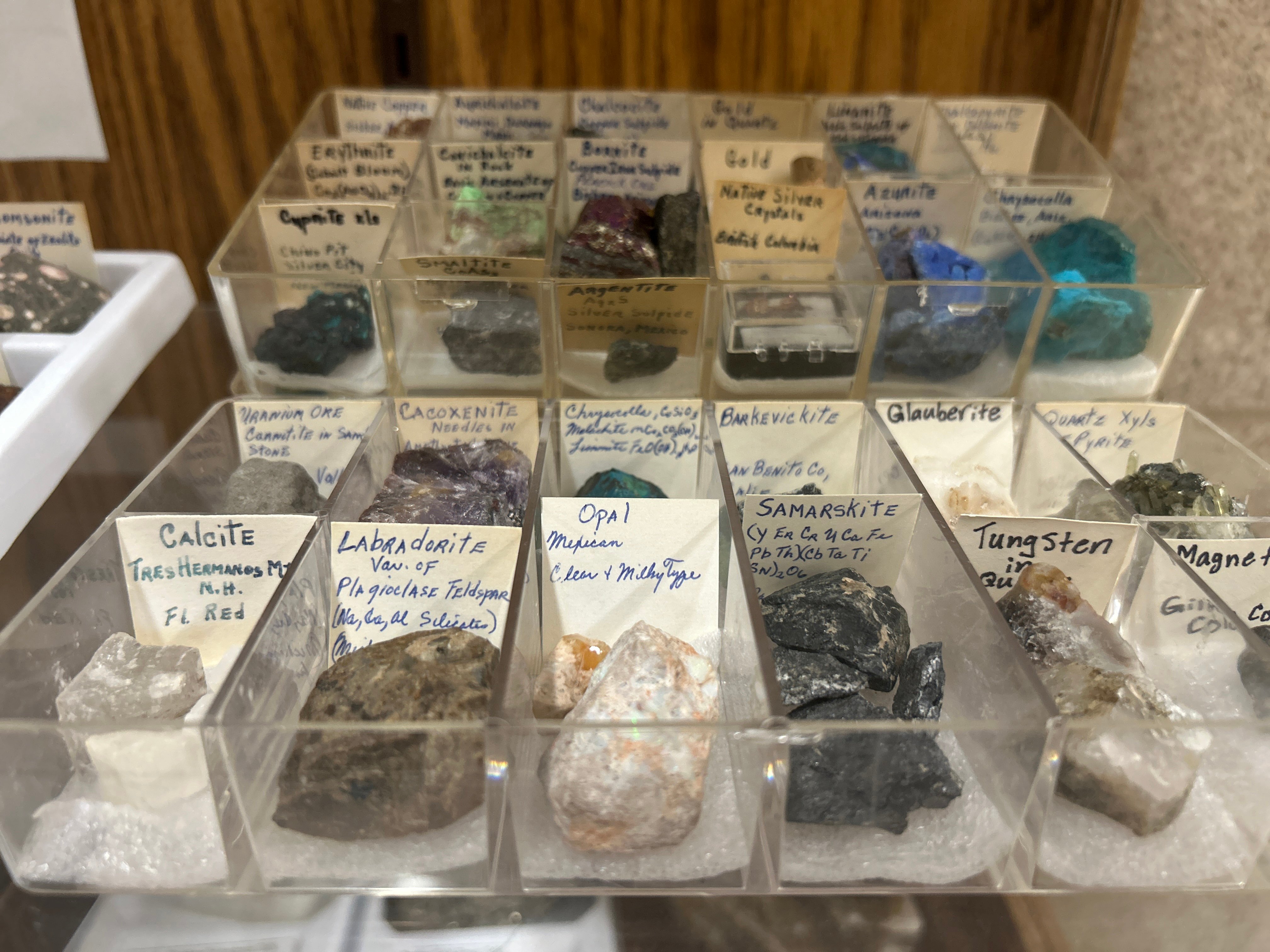
“The whole project was pretty daunting from the start,” he said. “We had these large storage lockers just full of unlabeled rocks. The best part of it all was figuring out the really complicated rocks, whether I was the one to do it or one of my peers.”
Brewer said he would occasionally find trinkets that Heles had scattered throughout the collection.
“My favorite was a little wooden bug set on a spring within a walnut shell,” said Brewer, whose career goal is to be a museum curator.
“James Heles had such an interesting life story,” Brewer said, “and it was fun to peek through this window we had access to and learn more about him.”
Most of the pieces came with labels, often in Heles’ own handwriting.
“It’s been shuffled around a couple of times since it arrived in 1997, but it’s never been properly cataloged or organized, and we took a big step with that this year,” Wisely said.
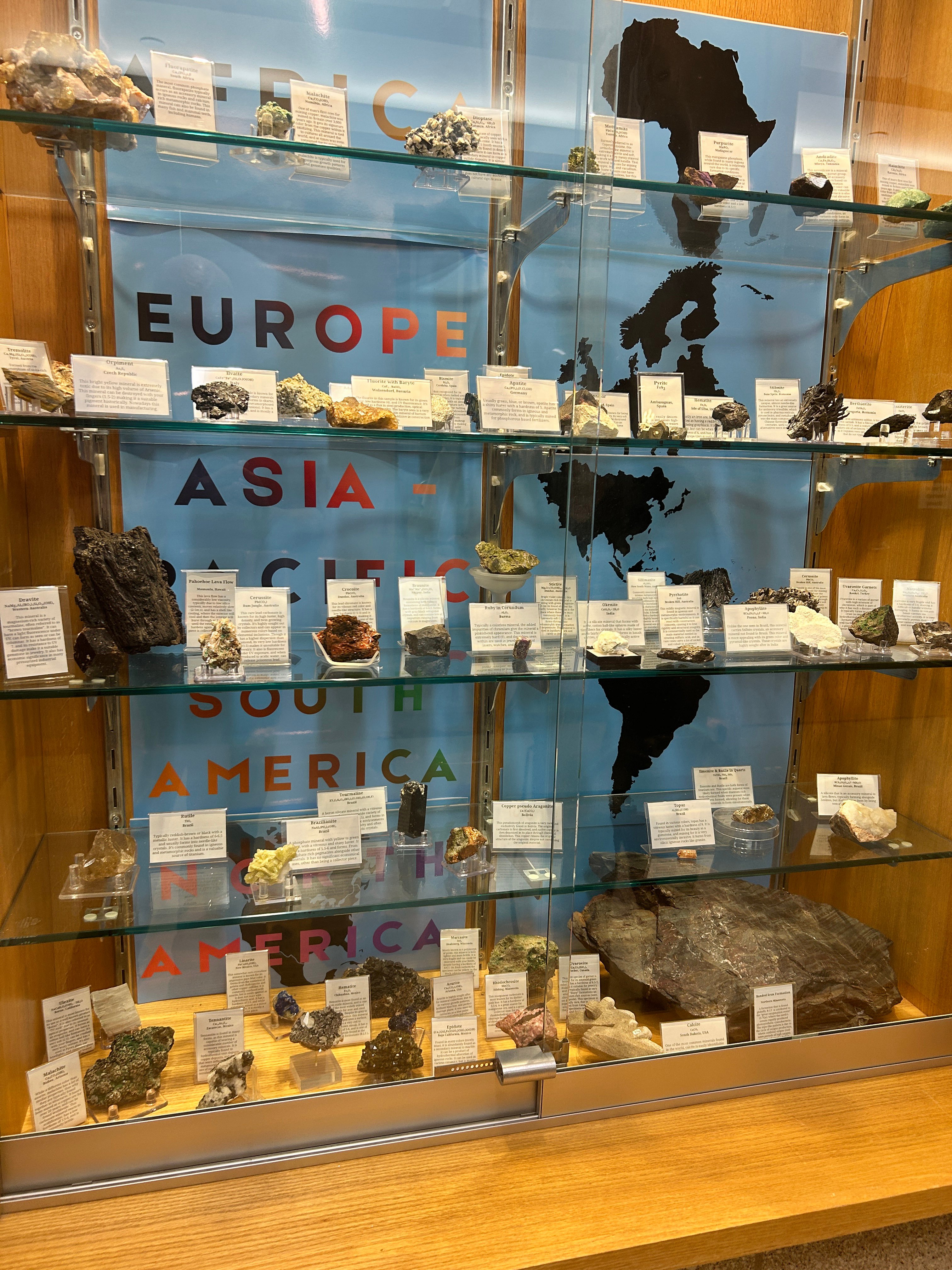
Thus far, the hallways in Ford Hall have more than a dozen glass cases showcasing what could be called Earth’s Jewelry Store. Many more pieces still remain hidden but categorized and organized for easy access by future students and teachers.
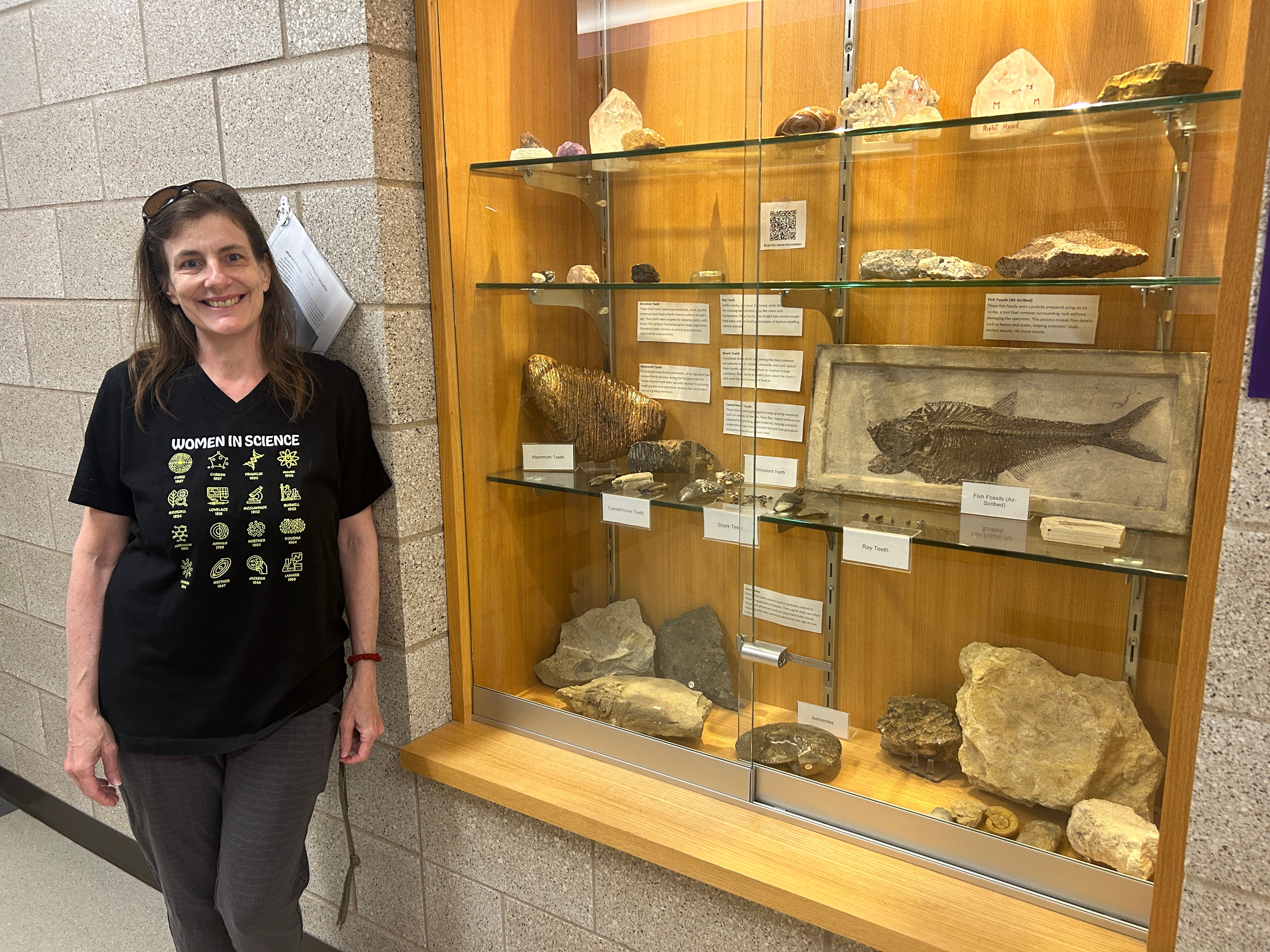
“My mission is to educate so that we have informed citizens and we have local geologists who really care about the environment, who care about responsibly providing resources for society, because that’s what geology boils down to,” Wisely said.
“A cell phone has hundreds of geological resources in it. The car you drove to work today, the paint on your house walls and the asphalt we drive on all come from geological resources. Everything is sourced from the Earth.”
Knowing the collection is now visible and accessible puts a happy ending on the family story of James Heles’ passion for education and learning.
“It's exciting for it to be rediscovered, because it's a really important collection,” said Pitschneider, now of Shakopee. “Not a lot of colleges have a collection like this, I mean, even the big ones. It's beauty to look at, it's beauty to explore, it's beauty to learn.
“It's very exciting that it's been rediscovered.”
A Legacy Living on for Future Peacekeepers
After alum and police Matthew Ruge was killed in a domestic violence standoff, his family honors his memory with a law enforcement scholarship. By Robb Murray ’96
Finding the CURE
Finding the CURE. Program Gives Undergraduate Researchers More Opportunities. By Grace Brandt '13.
A Reputation Here, There and Everywhere
A Reputation Here, There and Everywhere. From the air above to business below, Minnesota State Mankato enjoys a widespread reputation across disciplines and across borders.